Pre-Filled vs DIY Sandbags for Storm Preparation
Pre-filled and DIY sandbags can both divert shallow storm runoff, but they demand different amounts of time, equipment, and physical effort. Choose based on how quickly you need a dependable barrier and how often you expect to deploy it.
Compare the work before comparing the price
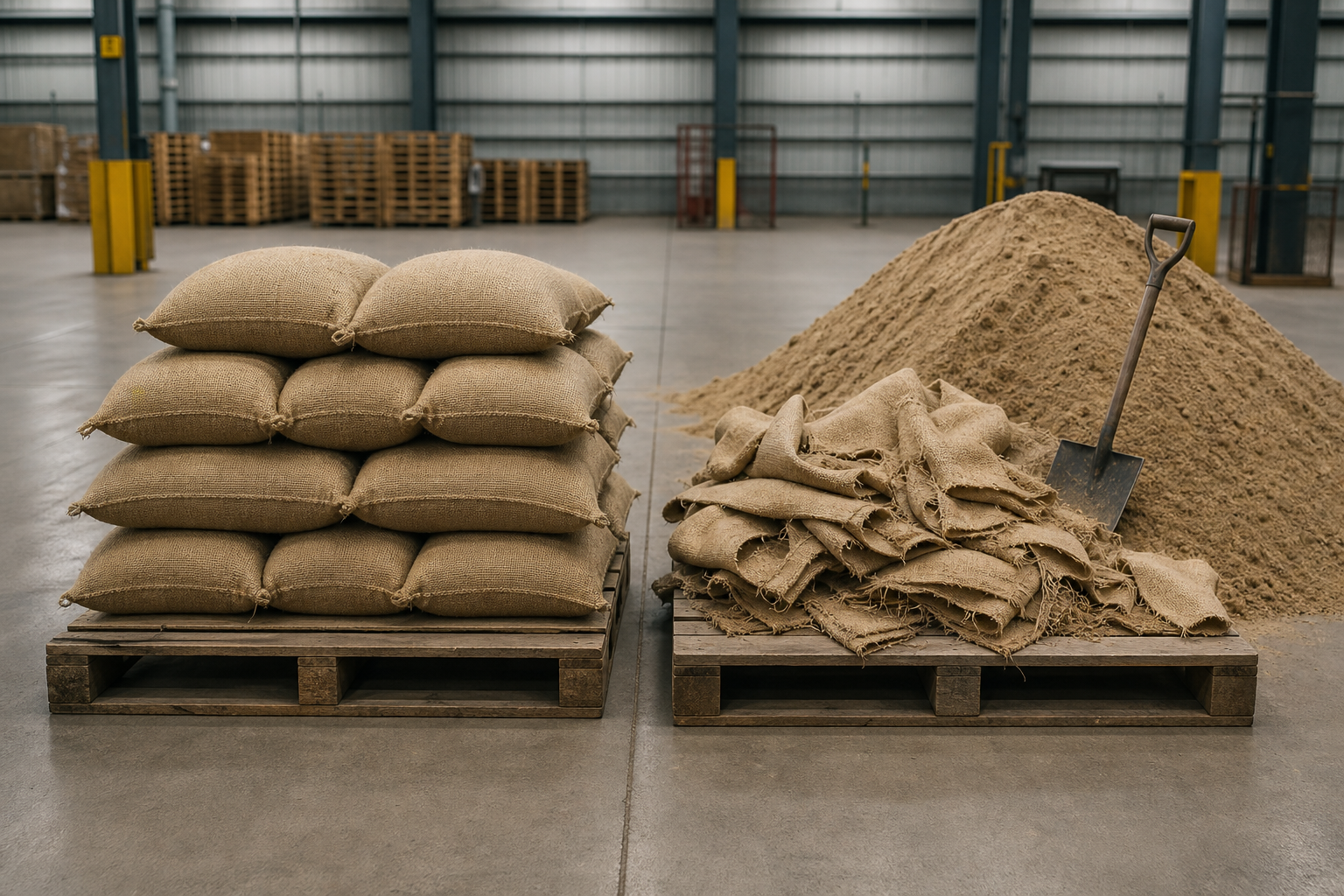
A do-it-yourself bag is not simply an empty sack plus sand. It requires a suitable aggregate source, a dry work area, shovels, gloves, a way to hold bags open, ties or folding technique, transport, and time to fill consistently. That work can be sensible for a planned, large project with a crew and readily available material. It becomes difficult when the forecast has already changed, the ground is wet, or one person is trying to fill bags while also clearing gutters and moving possessions.
Pre-filled bags arrive ready to place. Their most immediate advantage is not convenience in the abstract; it is that the household can focus on barrier layout and safety. Consistent fill weight helps bags lie flat and overlap predictably. Edmonton Sandbags supplies pre-filled 18 kg hessian bags through SandBags.ca. At $4.99 per bag with a minimum of 10, a homeowner can calculate the material cost without separately sourcing sand and empty sacks.
Consider speed during an approaching storm
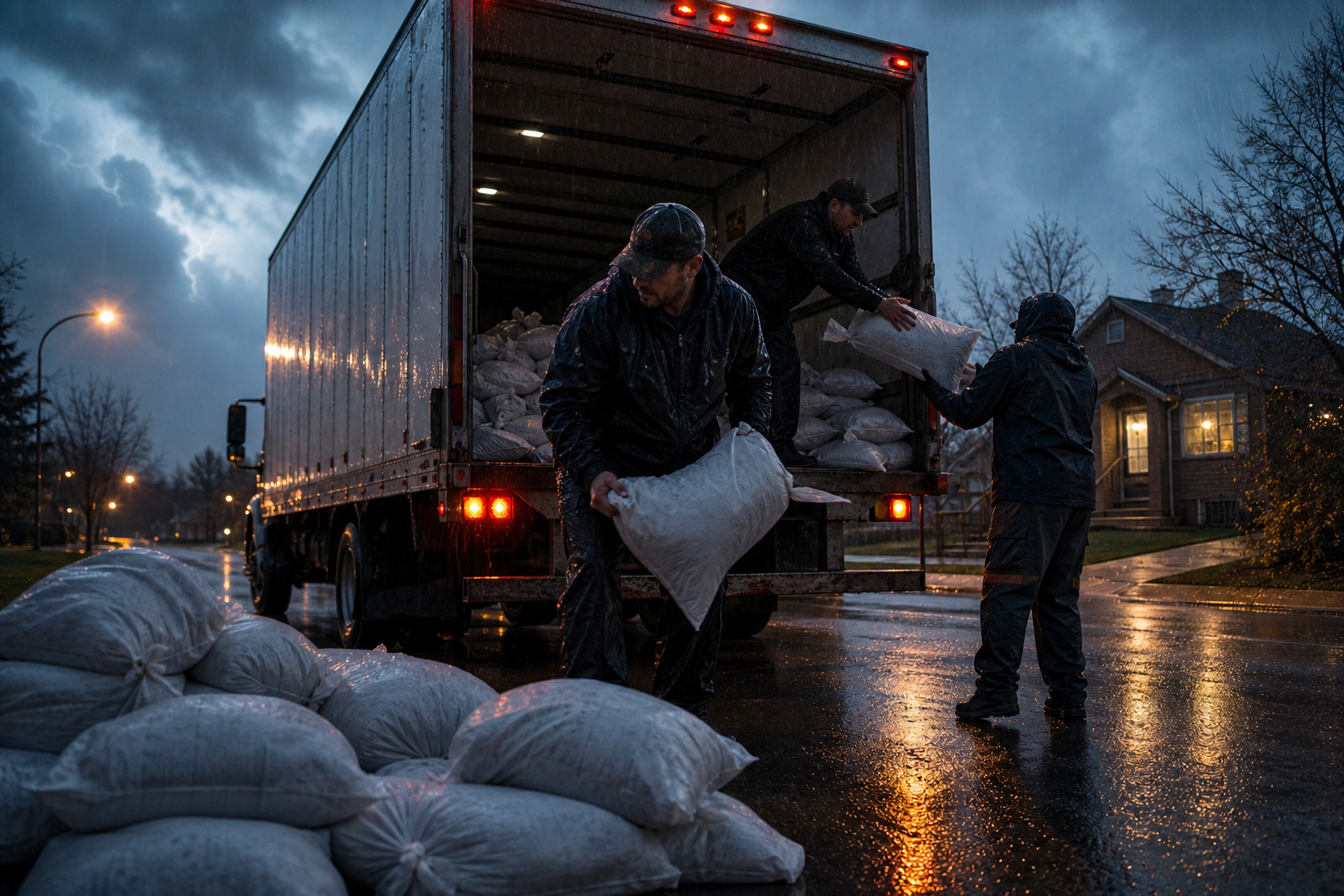
Filling a bag properly takes repeated scoops, adjustment, and closure. Multiply that by 20 or 40 bags, then add loading, unloading, and cleanup. In dry weather, the task may be a useful preparation activity. In a rapidly developing storm, it can leave the barrier incomplete when it matters most. Loose sand can also become slippery or wash into drains if it is staged poorly. A pre-filled stack lets two people begin building immediately, one carrying and one setting bags, while a third checks weather alerts.
Speed must not encourage unsafe work. If lightning is audible, stop outdoor placement regardless of whether bags are pre-filled or homemade. Do not drive through rising water to acquire material, and do not overfill a bag beyond what you can safely lift. An 18 kg bag is substantial; use a close carry, avoid twisting, and trade tasks when fatigue develops. A smaller, correctly placed line built early is more useful than an ambitious wall completed under hazardous conditions.
Assess storage and material durability
Empty bags take less space than filled bags, which can appeal to owners with limited storage. Yet empty bags alone are not a complete flood supply: you still need clean, accessible fill material when the event occurs. Storing loose sand outdoors may invite contamination, moisture, weeds, or an unexpected landscaping project. Storing filled bags requires more room and a dry, covered location, but it preserves a ready-to-use response. Keep bags off persistently damp soil and inspect natural-fibre hessian for weakening, mildew, insects, or rodent damage.
- Choose DIY filling when you have advance notice, equipment, safe material access, and enough help.
- Choose pre-filled bags when response time, predictable weight, and straightforward placement matter most.
- Keep either option away from vehicle routes, electrical equipment, and low points that flood first.
- Replace bags that are torn, contaminated, or no longer hold a compact shape.
Neither choice eliminates the need for sound drainage. Clear eavestroughs, extend downspouts, maintain window-well covers, and address chronic grading problems separately. Sandbags are temporary water-management tools, not a permanent waterproofing system.
Think about placement quality
A poorly filled DIY bag can be too round, too light, or lumpy with oversized material. Those defects leave channels between courses. A bag that is roughly half to two-thirds full often seats better than an overstuffed sack, because it can flatten into the surface and conform to neighbouring bags. Pre-filled units reduce variation, but they still need correct placement: lay them lengthwise, overlap ends, press them down, and stagger the seams in the second course.
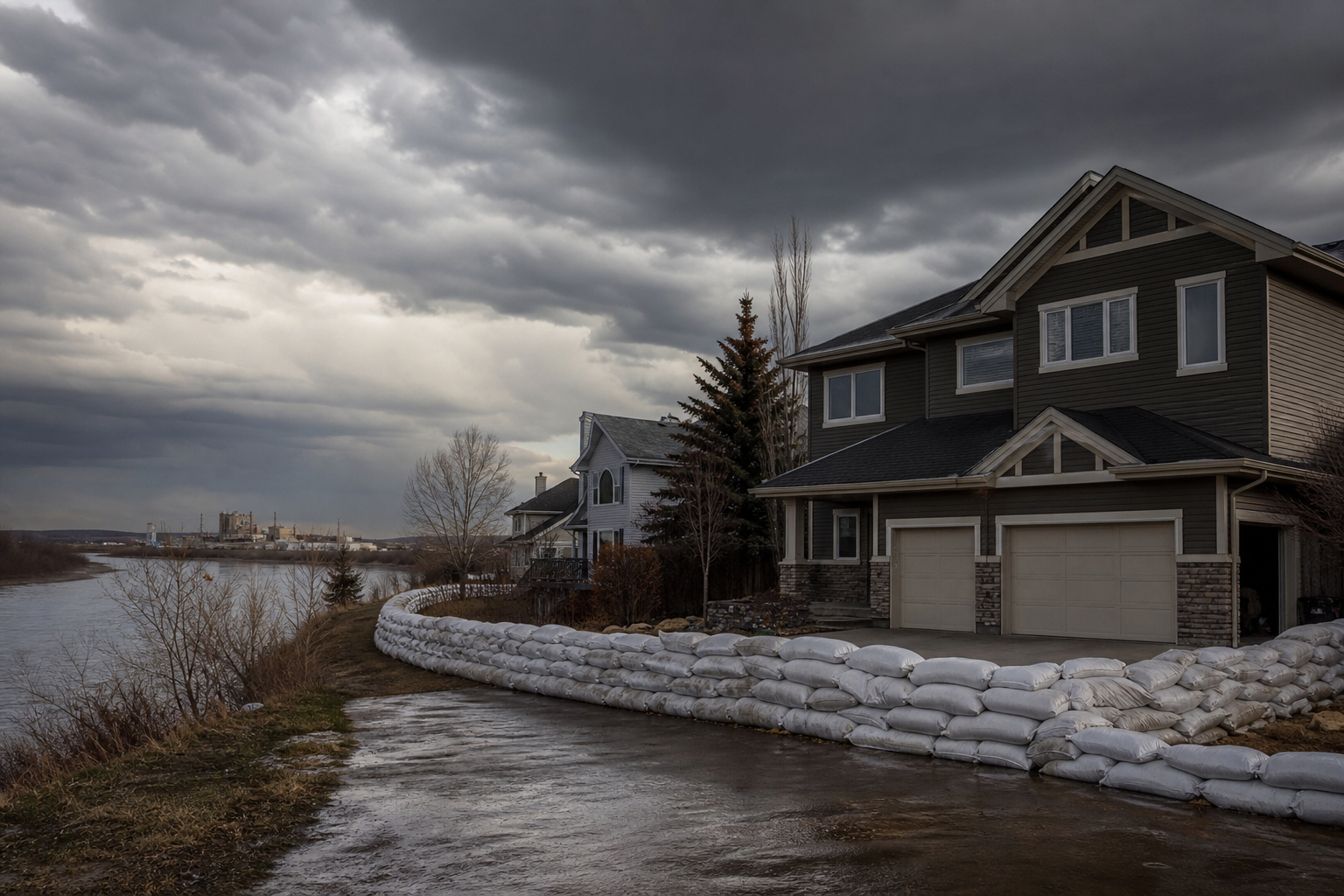
Use a sheet of plastic behind a door barrier, with the lower flap extending under the first row. Build short returns at both ends so water cannot simply go around the line. Choose a safe discharge direction before stacking. If your objective is a garage, stairwell, or window well, calculate the needed run rather than buying based on a vague pile size; the sandbag sizing guide shows practical examples.
Factor in delivery and pickup logistics
DIY supplies may require several stops: bags, fill material, a shovel, and perhaps a truck or trailer. Pre-filled ordering consolidates that work. Edmonton Sandbags offers 24/7 pickup from 4315 118 Ave NW, Edmonton, AB T5W 1A5. Delivery is $0.90 per kilometre, with a $10 minimum for distances under 10 km. Phone 1-888-552-7263 to discuss timing, access, and quantity before you need the bags at the driveway.
For a first reserve, measure the priority entrance, add return ends, and order enough to make two useful courses plus a few adjustment bags. Place the stack where it remains dry and can be carried along a safe path. If a neighbour wants to coordinate, make sure each property has its own drainage direction; a shared purchase does not mean a shared barrier should redirect water across a lot line. Request pricing or availability through the Edmonton quote form.
Make a choice that suits your response capacity
DIY filling rewards preparation, labour, and control over material. Pre-filled bags reward readiness and repeatable deployment. The better option is the one that will actually be available, intact, and safely placed before water reaches the building. Some households keep a small pre-filled emergency supply and use DIY material only for planned landscaping or a later, larger project. Others rely entirely on delivered bags because their schedule, vehicle, or physical capacity makes filling unrealistic.
After any use, inspect bags and the route they protected. Dry clean bags if appropriate, dispose of contaminated bags according to local guidance, and record the count that worked. Then improve the permanent drainage issue that caused the risk. A useful storm plan combines a realistic bag choice with early action, safe lifting, and a clear place for water to go.
FAQ
Are pre-filled bags easier to deploy?
Yes. They eliminate filling time and provide consistent 18 kg bags that can be placed immediately.
Can I store filled hessian bags?
Yes, keep them covered, dry, and inspect them periodically for damage or deterioration.
What does Edmonton Sandbags charge for delivery?
Delivery is $0.90 per kilometre, with a $10 minimum under 10 km.