How Many Sandbags for a Garage, Doorway, or Window Well?
Sandbag counts come from the width, desired height, and return ends of a barrier—not a guess based on the size of the opening. Measure first, then add enough bags to overlap seams and guide water around both ends.
Start with bag dimensions and a field measurement
Pre-filled bags flatten and spread when placed, so their effective length is less than their loose length. For planning, measure the actual line you need to cover with a tape measure, then allow for overlap. A practical starting estimate is one bag per 0.75 to 0.9 metres for each course, depending on how firmly the bags are seated and how much overlap you use. Do not use this as an engineering specification for a high-water barrier; it is a household estimate for low, temporary diversion.
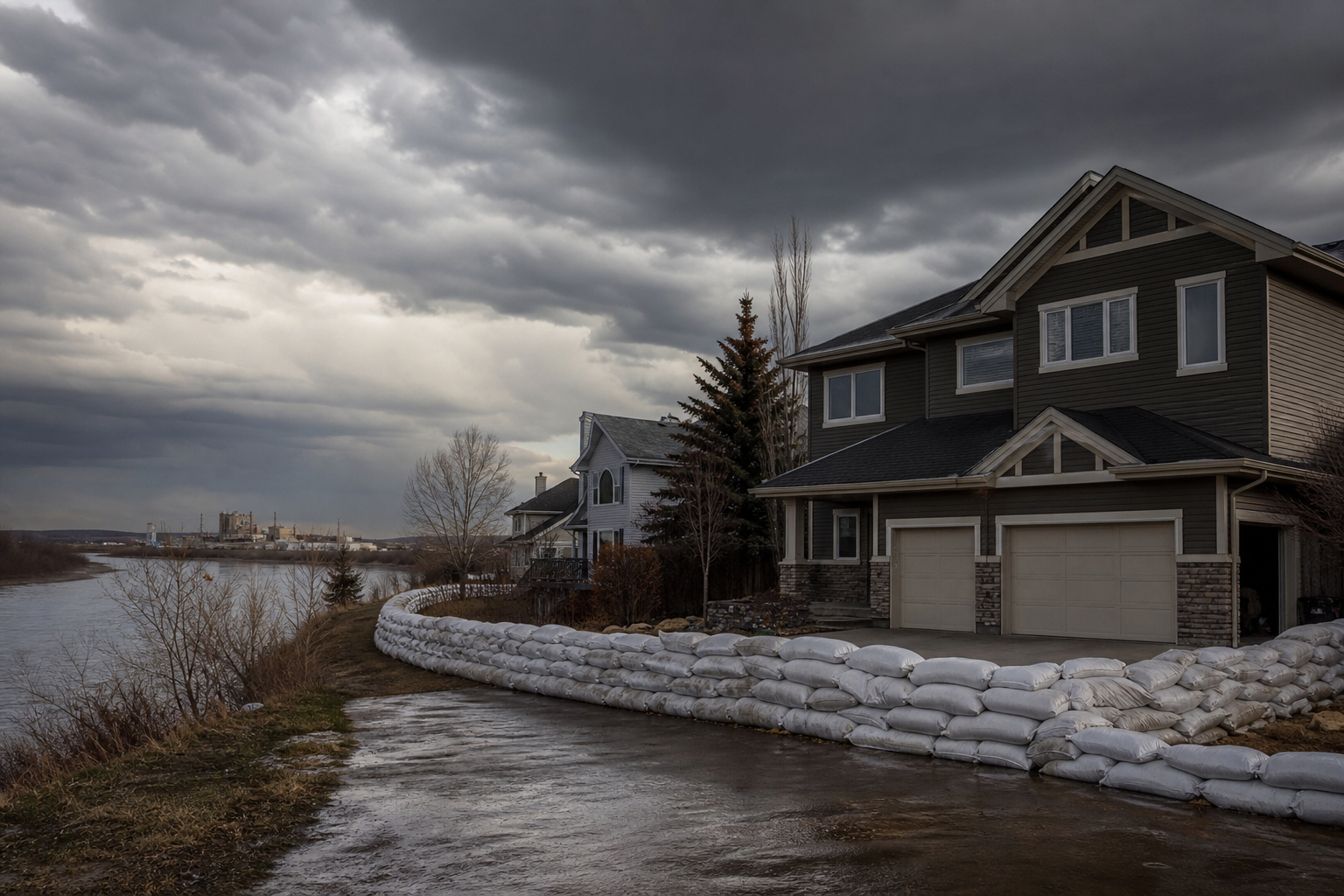
Measure more than the door frame. Include the distance past each side where water could curl around the ends. A garage may be five metres wide, yet need a seven-metre first course once you add one-metre returns on both sides. Write down the low side, the direction water arrives from, and where it will leave. If you cannot name a safe exit for the water, revise the layout before ordering bags.
Use a simple quantity calculation
First, calculate course length: opening width plus both end returns. Next, divide that length by your chosen effective bag coverage, rounding up. Finally, multiply by the number of courses and add a small allowance for corners, settlement, and a damaged bag. For example, a 3-metre doorway with 0.75-metre returns needs 4.5 metres of first-course coverage. At roughly 0.75 metres per bag, that is six bags. A two-course arrangement becomes 12 bags, and adding two spares gives a sensible order of 14.
- Course length = protected width + left return + right return.
- Bags per course = course length ÷ effective coverage, rounded upward.
- Total bags = bags per course × number of courses + contingency.
- Increase the estimate for corners, curves, sloped pavement, or uneven ground.
A longer first course with properly returned ends is usually more valuable than using every bag to make the centre taller. Water commonly bypasses the ends long before it overtops a short low barrier.
Example: a single exterior doorway
Consider a 0.9-metre door on a patio where runoff approaches from the right. Rather than covering only the threshold, build a line extending 1.2 metres left and 1.8 metres right to steer water toward the lawn. The course length is 3.9 metres. At 0.75 metres of effective coverage, plan six bags per course. Two courses require 12 bags, plus two to four for the longer turn and adjustment. A 15-bag supply is practical, though the exact placement should respond to the site.
Place a waterproof sheet against the lower part of the door, extending it outward under the first row. Do not block the door if it is an essential emergency exit. If the door is frequently used, plan a removable section and only install it when the weather risk warrants it. Test the route with a garden hose only when conditions and local water-use rules make that appropriate; never create a runoff problem for a neighbour.
Example: an overhead garage door
A standard double garage opening may be about five metres wide. Add one metre of return at each side for a seven-metre course. Dividing by 0.75 metres gives 9.34, so round to 10 bags for one row. Two firm courses call for 20 bags; a third low course or wider wings may raise the plan to 30. Inspect the driveway slope closely: if water approaches one low corner, put extra length there rather than spreading every bag evenly across high pavement.
Close the door before placing anything. Lay plastic with its upper edge supported against the door and weight the lower flap. Build from the low corner outward, overlapping bags and staggering the second row. Avoid leaning bags against a door in a way that could damage it or prevent safe operation. Never run a vehicle through a barrier to “test” it. The goal is an exterior water guide, not a sealed garage.
Example: a window well or basement stair
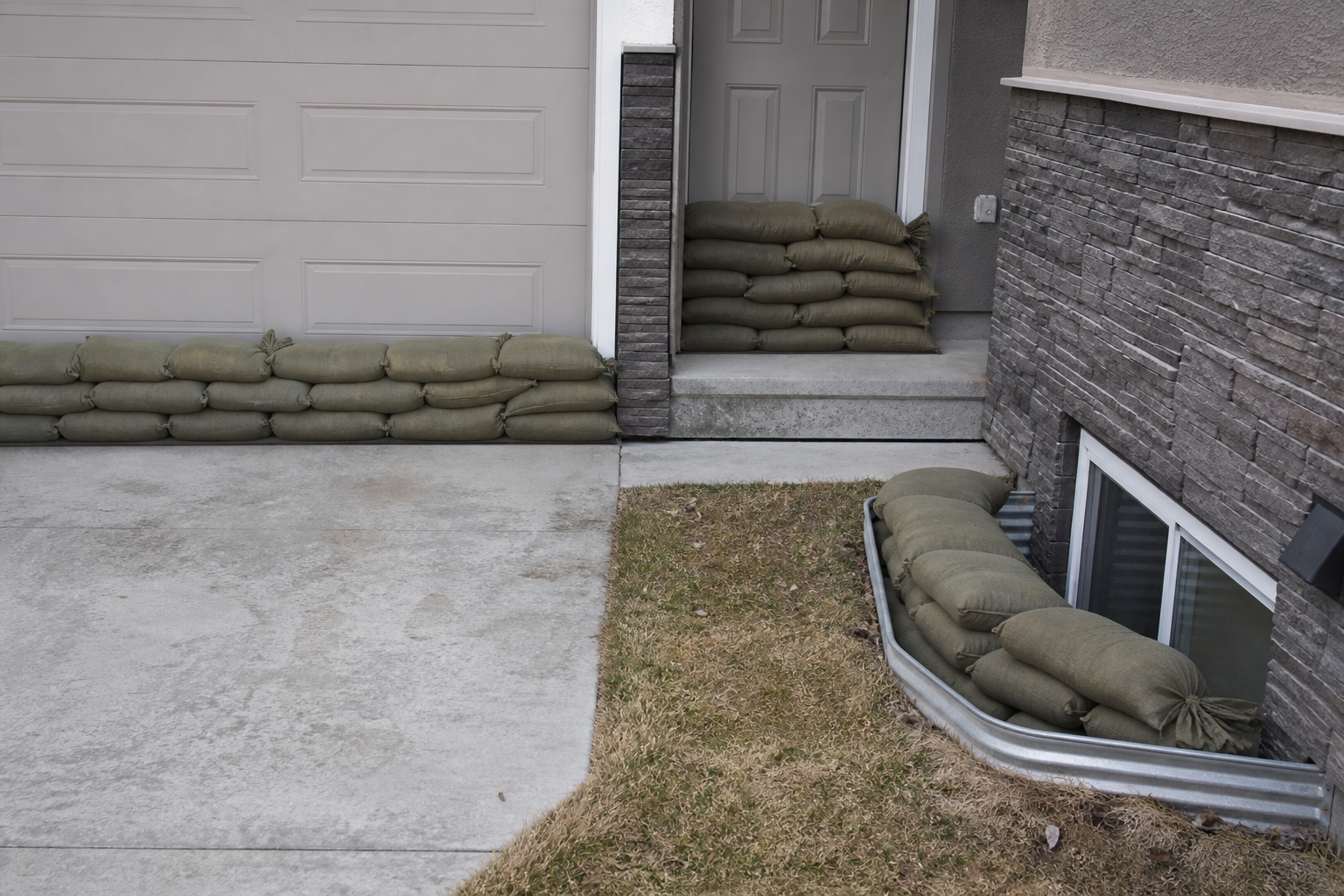
A window well is smaller but demands careful placement. Measure the uphill arc and the side edges where water can enter; avoid loading bags on a weak plastic cover. A 1.5-metre uphill line with two 0.75-metre wings is three metres total, or four bags per course at the planning ratio. Two courses plus several adjustment bags suggests 10 to 12 bags. Ensure the well drain is clear and the cover is secured. If water is coming from below or a drain is backing up, exterior bags will not resolve the underlying issue.
For a 1.2-metre-wide basement stair, add 1.5 metres along each side before turning outward. The line may total 4.2 metres, needing six bags per course. Because stairs collect and channel flow, use at least two courses and plan 14 to 16 bags. Keep the top landing and exit route usable. If water reaches electrical equipment or becomes sewage-contaminated, stay out and seek appropriate assistance.
Turn the estimate into an order
Edmonton Sandbags sells pre-filled 18 kg hessian bags for $4.99 each, minimum 10 bags. Once you have your measured total, round up to a quantity that protects the priority opening and leaves a few for corrections. Pickup is available 24/7 at 4315 118 Ave NW, Edmonton, AB T5W 1A5. Delivery is $0.90 per kilometre with a $10 minimum under 10 km; call 1-888-552-7263 for availability or use the quote page.
Keep your measurement sheet with the bags. Update it after every event: perhaps the garage only needed 18, but the side door needed a wider return. That record is better than generic internet counts because it reflects the slope and drainage behaviour of your own property. For a product overview, see sandbag flood protection.
FAQ
How many bags do I need for one door?
A two-course doorway barrier commonly starts around 12 to 15 bags after allowing for returns, but measure the full diversion line.
Why add bags past the opening?
Returned ends stop water from flowing around the sides of the barrier.
What is the minimum order?
Pre-filled bags cost $4.99 each and have a minimum order of 10.