Thunderstorm Flood Protection and Lightning Safety
A thunderstorm can change from a dark sky to hazardous runoff in minutes. Protecting a home means treating lightning safety and flood control as one sequence: prepare outside early, then get everyone indoors.
Use the forecast as a decision clock
Thunderstorm preparation begins before the first drop falls. Watch for watches and warnings from reliable weather sources, but also use direct signs: a rapidly darkening western sky, gust fronts, distant thunder, and a sudden temperature drop are reasons to stop casual outdoor projects. Assign one adult to monitor alerts and another to gather outdoor items. Decide in advance which entrance is the flood priority, where vehicles will be parked, and which interior room the household will use during lightning. A written plan is useful because thunder, pets, phone notifications, and rushing water make people forget simple steps.
When you hear thunder, lightning is close enough to be dangerous. Do not keep placing bags, clearing gutters, using a pressure washer, or standing beside a metal fence to finish “one last job.” Go to a substantial building or enclosed hard-top vehicle. Wait at least 30 minutes after the last audible thunder before returning outdoors. Avoid corded electronics and plumbing during the storm where possible. Flood protection must never require someone to work in an exposed yard while lightning is active.
Separate the lightning plan from the water plan
Before storm season, create a short exterior checklist that can be completed in dry conditions: identify the electrical panel, check that sump-pump discharge is clear, place battery lights where they are easy to find, and choose an elevated shelf for documents and medications. Indoors, move electronics and stored boxes off basement floors rather than relying on bags to save them later. Outside, secure patio furniture and bins so wind does not turn them into obstacles across a drainage route. Keep a charged power bank, drinking water, and a first-aid kit in the safe room.
- Never shelter under a tree, gazebo, or open carport during lightning.
- Do not drive through water that hides the road surface, a ditch, or a stalled vehicle.
- Keep away from downed lines and report them instead of moving branches nearby.
- Turn around if a route is covered by fast water; depth and force are difficult to judge at night.
- Move upstairs if flooding threatens electrical outlets or the furnace area.
These choices reduce risk even if no water enters the home. They also free the family to focus on evacuation notices or emergency instructions rather than improvising around a hazardous exterior.
Build flash-flood protection before thunder begins
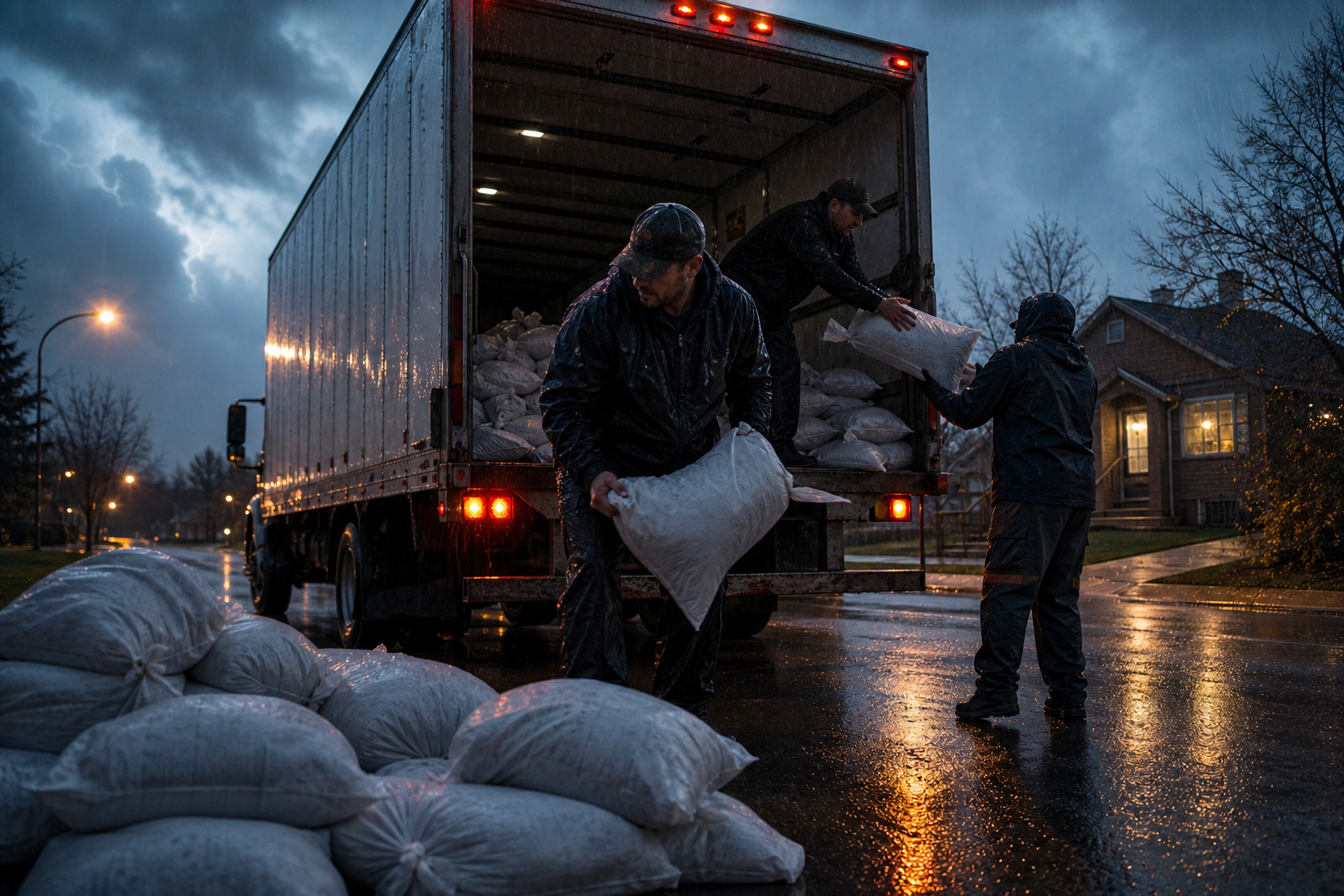
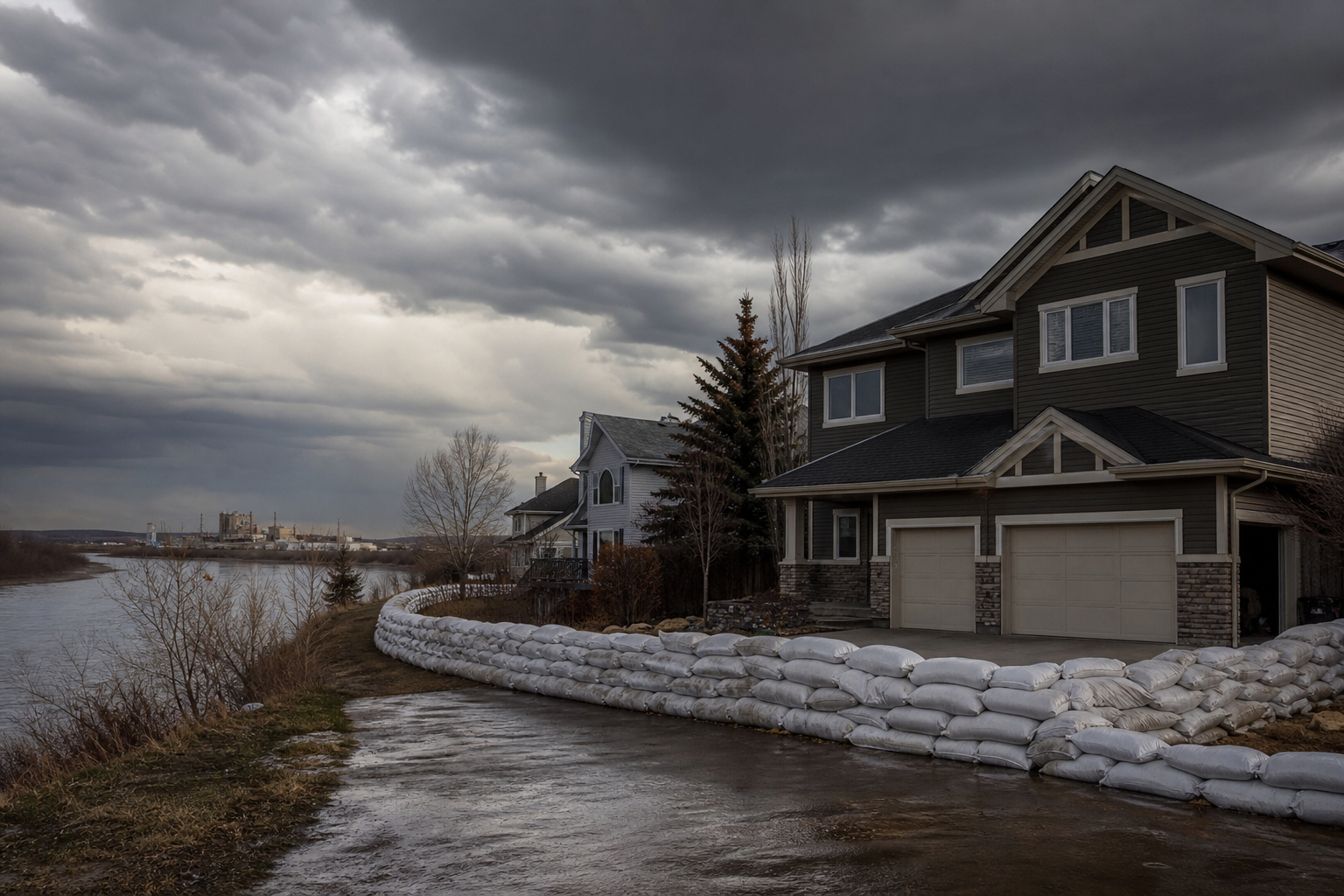
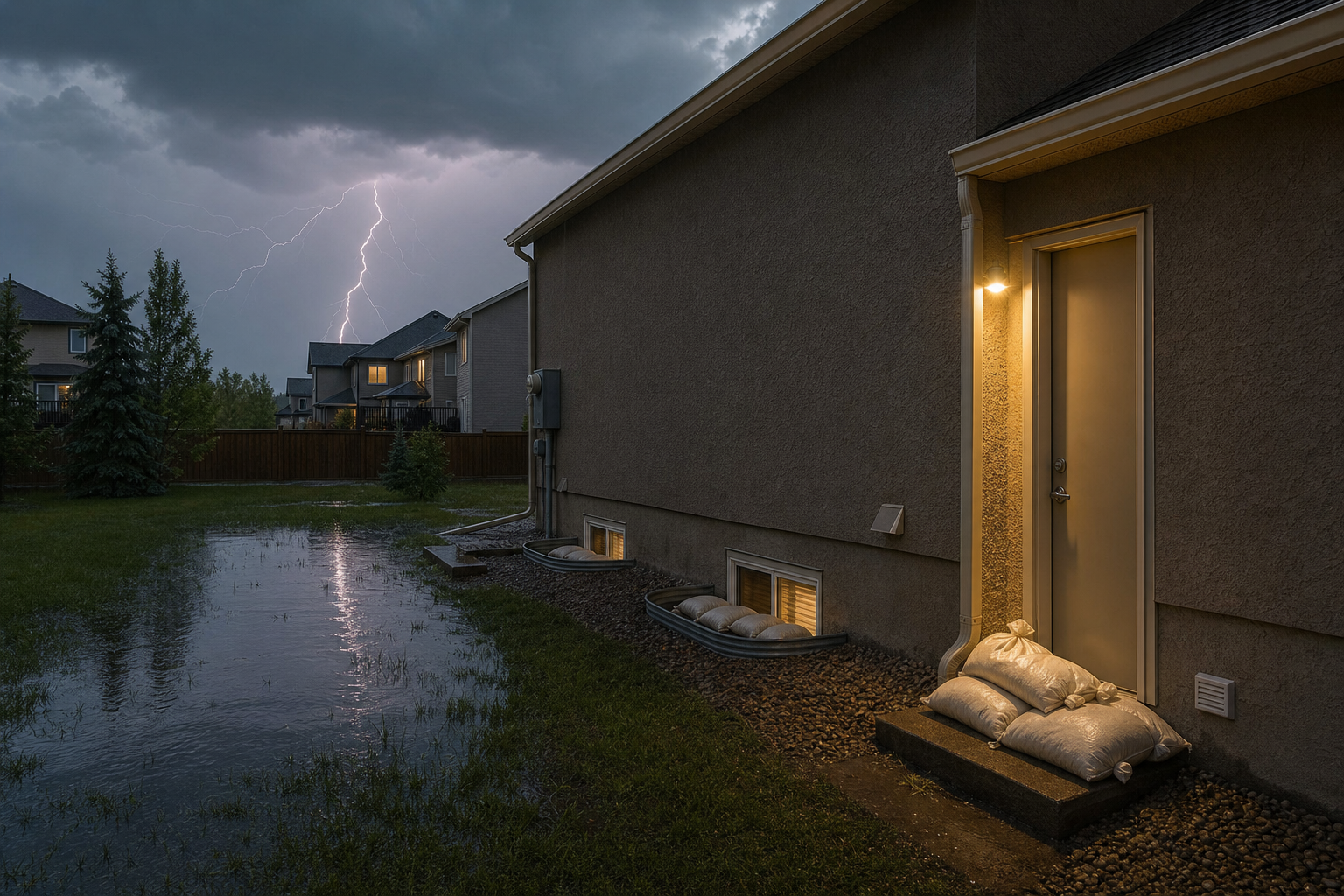
Flash flooding commonly exploits a low garage, a walkout basement door, a window well, or a driveway that slopes to the house. Lay a waterproof sheet against the opening first, allowing enough material to extend outward beneath the bag line. Place the first row firmly over that lower flap, then overlap bags end-to-end and stagger a second row. Curving the ends uphill is important; water can bypass a neat straight wall in seconds. Aim to redirect shallow flow, not hold back a pond. If the volume is already rising around the property, leave the area and follow local emergency guidance.
Pre-filled 18 kg hessian bags save time in this situation because there is no loose material to shovel while weather deteriorates. Edmonton Sandbags, available through SandBags.ca, sells them for $4.99 per bag with a minimum of 10. For pickup, the warehouse is at 4315 118 Ave NW, Edmonton, AB T5W 1A5, with 24/7 availability. Delivery is $0.90 per kilometre, with a $10 minimum under 10 km. Call 1-888-552-7263 early in the warning period rather than assuming a last-minute trip is safe or necessary.
Make the garage a controlled zone
A garage is vulnerable because its broad door can sit below the driveway grade. Park vehicles on higher ground before the storm if that can be done safely, then close the door and build from its lowest edge outward. Place a sheet against the threshold, add one tightly packed course, and return the ends along the driveway to form short wings. Do not leave an engine running in a closed garage, and do not use the garage as a lightning shelter. If water approaches outlets, the door opener, or a vehicle, stay clear and do not wade in to recover tools.
For a detached garage, consider what is stored inside. Raise paint, fuel containers, and chemicals onto shelves in advance, and secure them so they cannot float. If contaminated water reaches the garage, avoid spreading it through the house on footwear. Photograph damage from a safe location for insurance records after the storm, but never delay emergency action to document a scene.
Respond after the cells pass
The end of rain is not automatically the end of danger. Nearby creeks, storm drains, and low roads can rise later as water travels from upstream neighbourhoods. Check weather updates, listen for municipal instructions, and inspect from a dry, stable location. Do not enter a flooded basement until electricity and structural concerns have been assessed. A wet electrical panel, a shifted foundation wall, or sewage-contaminated water calls for professional advice.
Once conditions are safe, review the response as a household. Did the alert reach everyone? Were bags staged at the right opening? Did the safe room have a working light? Replace used supplies, wash reusable tools, and write one improvement for next time. For barrier layouts beyond a single doorway, explore flood-protection options and request an estimate through the quote form. Calm preparation before a storm is the most effective lightning safety measure of all.
FAQ
When should I stop placing sandbags during a storm?
Stop as soon as thunder is audible, high winds make work unsafe, or moving water makes the route hazardous.
How long should I wait after thunder?
Wait at least 30 minutes after the last audible thunder before going back outside.
Does delivery have a minimum charge?
Yes. Delivery is $0.90 per kilometre, with a $10 minimum for trips under 10 km.