Spring Melt vs Summer Storms: Sandbag Strategies
Spring melt and summer cloudbursts put water around a house for different reasons. The best sandbag strategy changes with the speed, source, and duration of that water.
Snowmelt is a slow drainage test
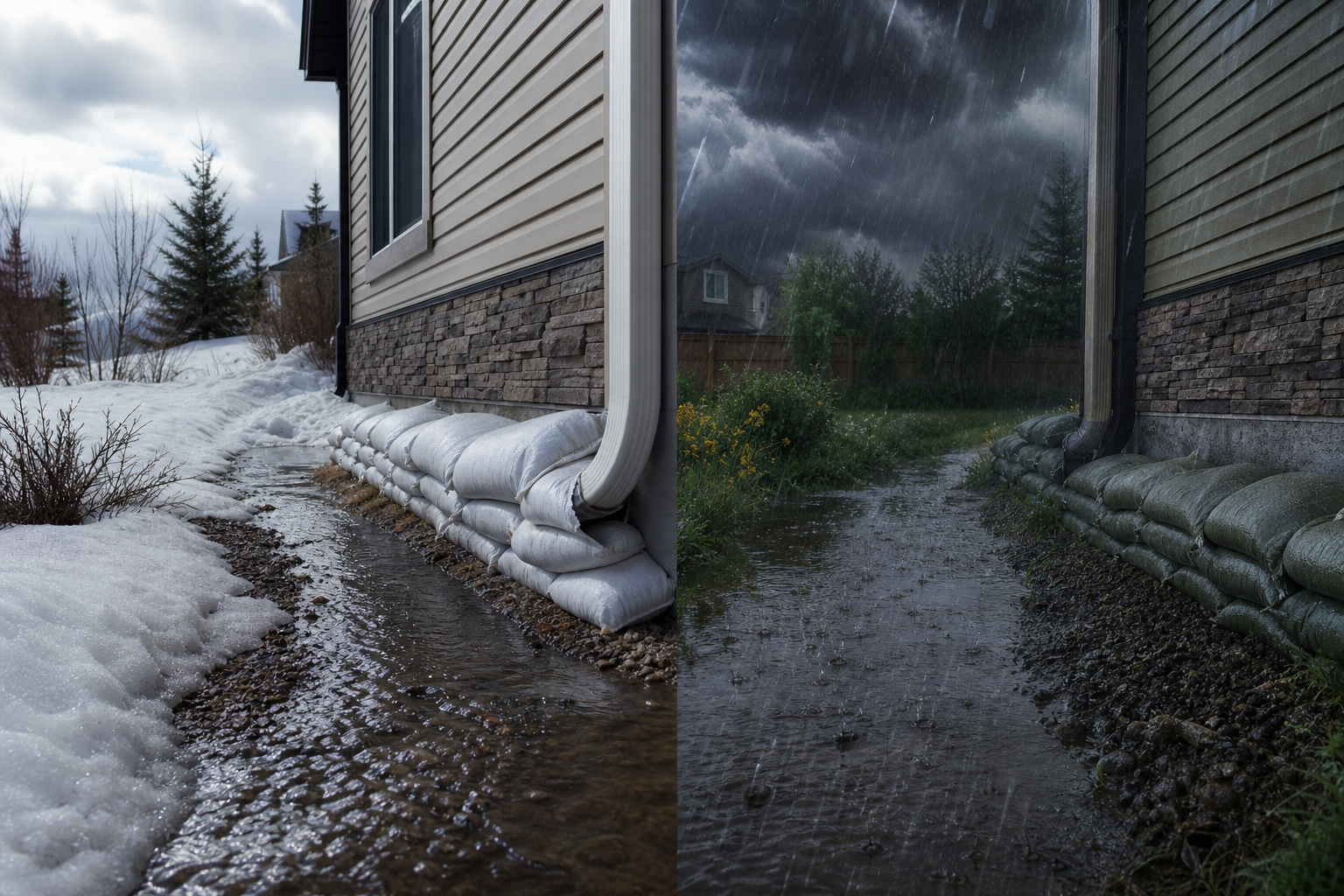
Spring thaw usually gives homeowners time to observe. Snow retreats in patches, frozen soil limits absorption, and meltwater can follow the same low line for days. That slow pace is useful: walk the lot at morning and evening, noting where snow piles dam a swale, which downspout freezes at its outlet, and whether water sits against the foundation after a mild day. The concern is not merely a large puddle. Repeated wetting beside the house can enter through small cracks, overwhelm a window well, or saturate soil around a basement wall.
During melt, remove snow from the first metre around the foundation where feasible and direct it toward a safe part of the yard. Open obvious drainage paths without damaging landscaping or sending water onto sidewalks where it may freeze. Check that extensions point away from the building and that sump discharge is not returning immediately to the footing. A low sandbag berm can hold a temporary route open when a melting snowbank keeps collapsing into it. Because conditions persist, check that berm daily rather than assuming yesterday’s shape still works.
Summer rain demands a rapid response
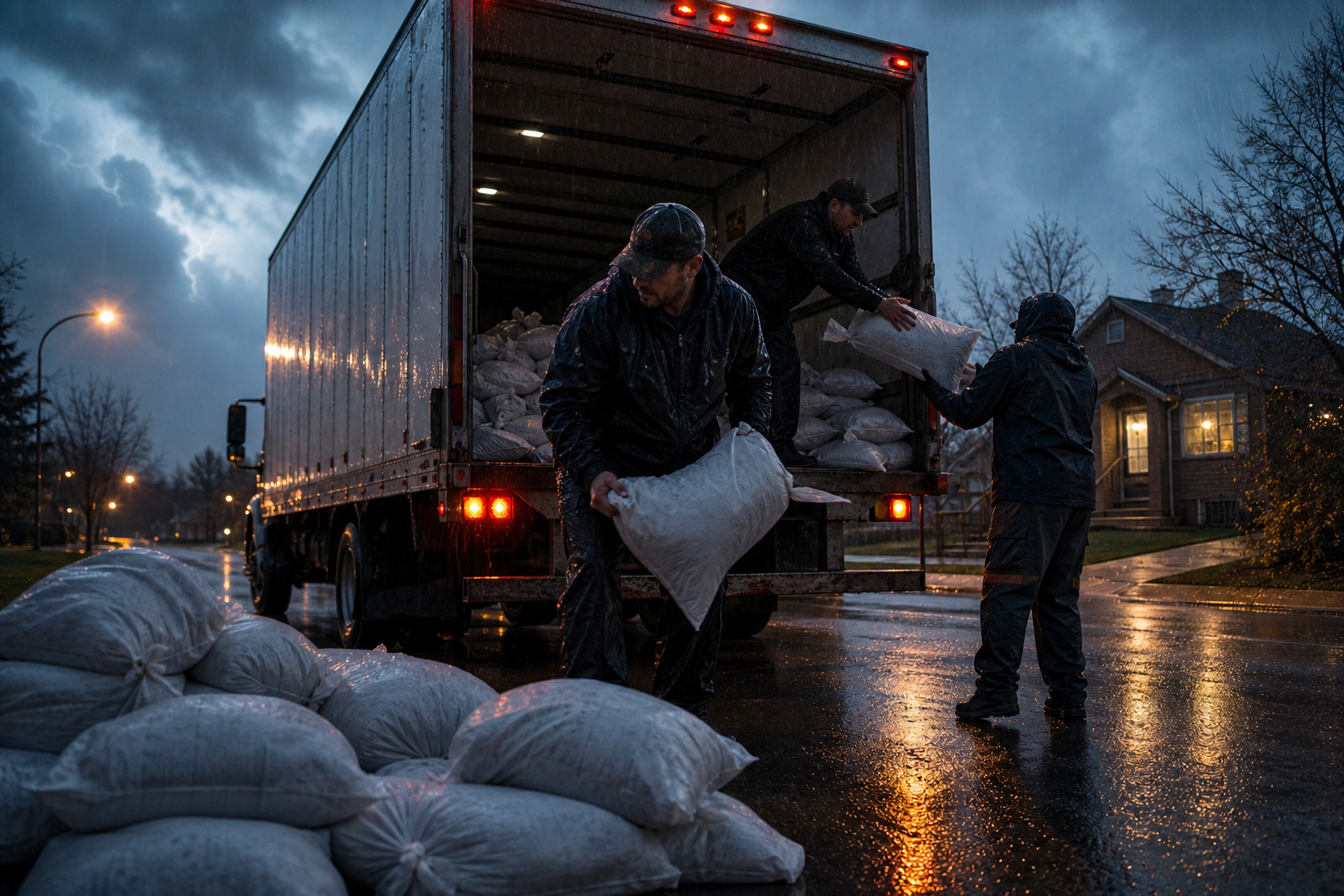
Convective summer storms are different. Dry ground may shed a sudden intense burst before it can absorb it, and wind can fill gutters with leaves just when capacity matters. There may be no opportunity to observe the flow gradually. For this season, pre-stage bags near the two most exposed openings and decide exactly who will place them. Keep the stack covered, accessible, and away from a path that becomes flooded first. A homeowner who has already measured the garage or stairwell can act quickly without guessing where the line should go.
Use a tarp or heavy plastic under and behind a short wall at a door. Seat each bag flat, overlap its neighbouring bag, and extend the ends uphill. The objective is to turn shallow water aside, not create a tall reservoir. Summer wind is another reason to keep the arrangement compact and stable. Remove lightweight furniture and toys from the drainage route before they block a grate or lodge against the bags. During lightning, abandon outdoor work and shelter indoors; a half-finished barrier is not worth exposure.
Match your inspections to the season
- In March and April, inspect downspout outlets, snow piles, sump discharge, and icy low spots every thaw cycle.
- Before June storms, clear eavestrough debris and test the route from driveway to a safe discharge point.
- After a wind event, look for branches or mulch that could clog drains before the next rainfall.
- At the end of either season, record which entrances stayed dry and which need permanent improvement.
Inspection is where the seasonal comparison becomes practical. Spring reveals gradual grade problems. Summer exposes capacity problems: a short, intense flow may exceed a catch basin or jump a curb that was adequate for meltwater. Treat those findings differently. Regrade, extend downspouts, or consult a drainage professional for persistent spring patterns. Add staged barriers, a backup power plan, and alert monitoring for sudden summer events.
Choose bag placement based on water behaviour
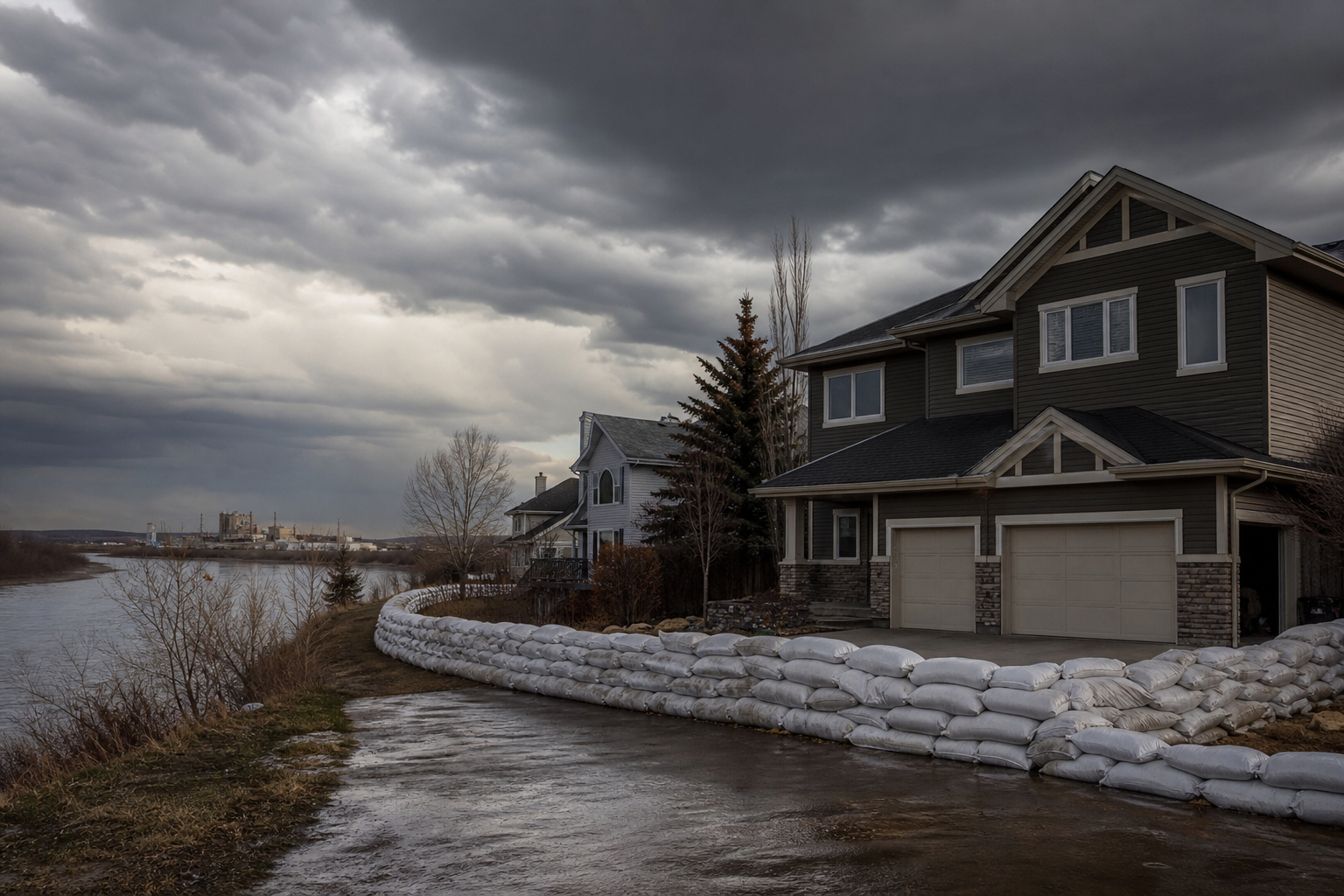
For meltwater, a longer, low contour line can slowly guide water across a lawn toward a suitable outlet. Build it before the warmest part of the day, when the ground is firmer and the water is shallower. Avoid trapping meltwater behind the line, since it can refreeze and damage surfaces overnight. For a storm, protect the concentrated breach point: the low corner of a garage door, a basement stair, or the uphill edge of a window well. Add short returns at the ends to stop bypassing. Both layouts benefit from staggered courses, but their purpose is distinct.
Edmonton Sandbags offers pre-filled 18 kg hessian bags, making either setup more predictable than filling loose sacks in cold slush or driving rain. Through SandBags.ca, bags are $4.99 each with a 10-bag minimum. Pickup is available 24/7 from 4315 118 Ave NW, Edmonton, AB T5W 1A5. If transporting a stack is impractical, delivery costs $0.90 per kilometre, with a $10 minimum below 10 km; call 1-888-552-7263 to confirm timing and quantity.
Create a two-season supply routine
Do not wait to replace a used or degraded bag until a warning appears. At the end of spring, dry clean bags where appropriate and inspect hessian for rot, torn seams, or rodent damage. Count what remains, then compare it with your measured barrier plan. Before summer, relocate the supply so it can be reached from a dry side of the property, and make sure at least one adult knows the pickup address and delivery terms. A simple label stating “garage: 18 bags; stairwell: 12 bags” eliminates rushed arithmetic.
Seasonal planning also means knowing the limits of temporary protection. Sandbags cannot correct a failed sump pump, a blocked private drain, or water rising from a sanitary backup. Keep important belongings elevated, retain relevant service contacts, and follow any municipal flood instructions. Read the runoff guide for yard-routing ideas, then use a quote request to build a reserve suited to your property. Spring gives you evidence; summer rewards preparation.
FAQ
Why is snowmelt different from heavy rain?
Meltwater is usually slower and persistent on frozen ground, while summer storms can create concentrated runoff with little warning.
Should I keep sandbags after spring?
Yes, if they remain clean and structurally sound; inspect and store them dry before summer storm season.
Where is 24/7 pickup available?
At 4315 118 Ave NW, Edmonton, AB T5W 1A5.