Sandbags for Gibbons and Bon Accord Drainage Control
For Gibbons and Bon Accord, sandbags are most useful when they redirect shallow runoff around garages, culverts, sheds, and low entrances. Pre-filled 18 kg hessian bags let property owners act quickly while keeping a planned drainage outlet open.
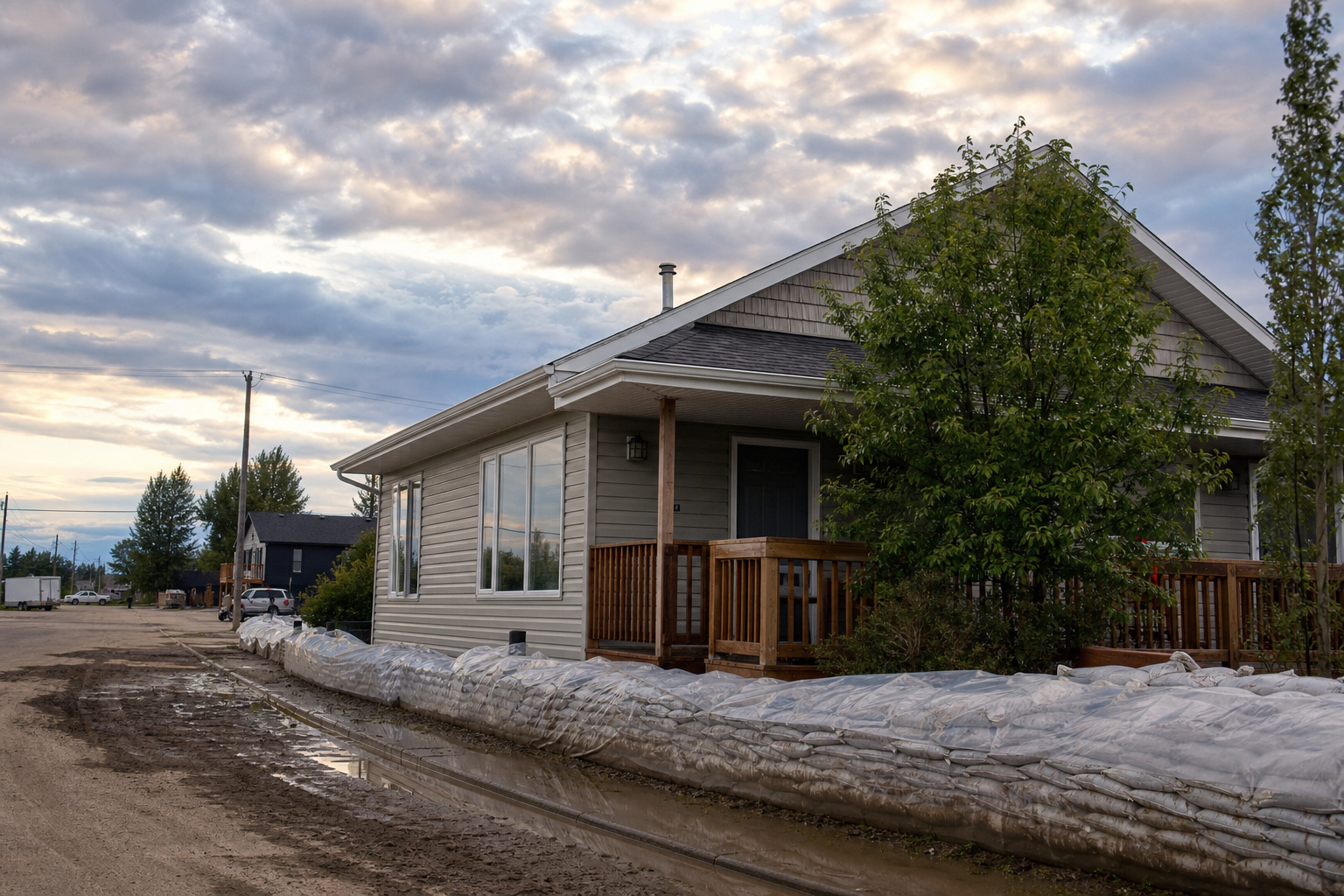
Read the ditch, culvert, and curb
Gibbons and Bon Accord properties often have a different water story than a dense inner-city block. A roadside ditch, culvert crossing, broad boulevard, gravel shoulder, or open acreage swale can collect a surprising volume before it reaches a building. Start the inspection at the outlet rather than the door. Locate the culvert mouths, storm inlets, ditch direction, and lowest edge of the driveway. Remove removable debris only where it can be done safely from dry ground. Never reach into flowing water or enter a culvert. If a public drain is blocked, report it; trying to reshape public infrastructure with a private barrier can worsen the problem downstream.
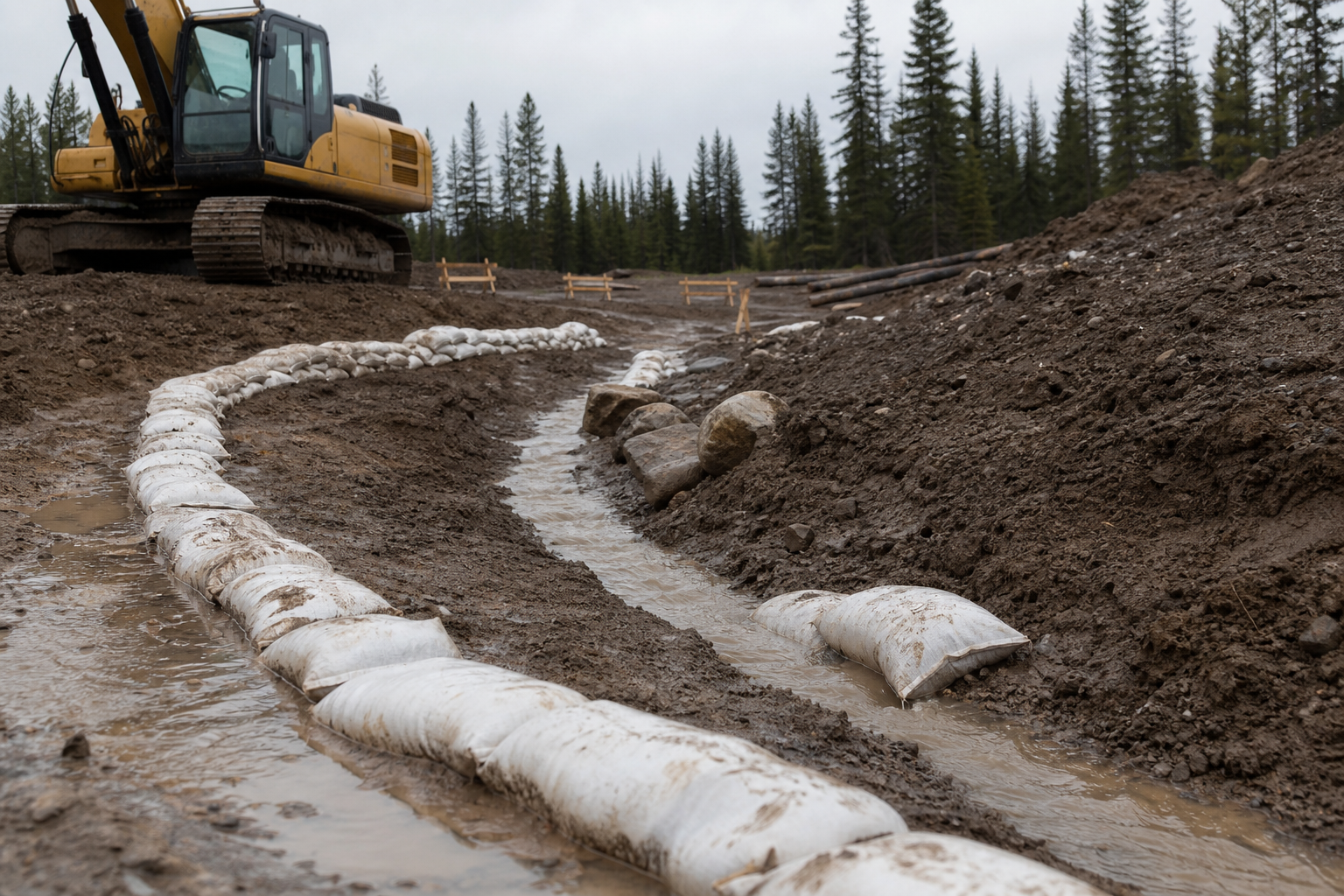
Next, identify what must stay dry. It may be a garage slab, a livestock shelter, a garden storage building, a business loading apron, or an electrical service area. The best bag layout does not necessarily stop water at the building. Often it begins upstream, using a gentle diagonal to guide the sheet toward an existing ditch or open ground. This approach takes less material and prevents water from collecting behind a straight wall. Make the diversion gradual. A sudden ninety-degree dam creates pressure and can erode loose gravel at its ends.
Lay a diversion that does not trap water
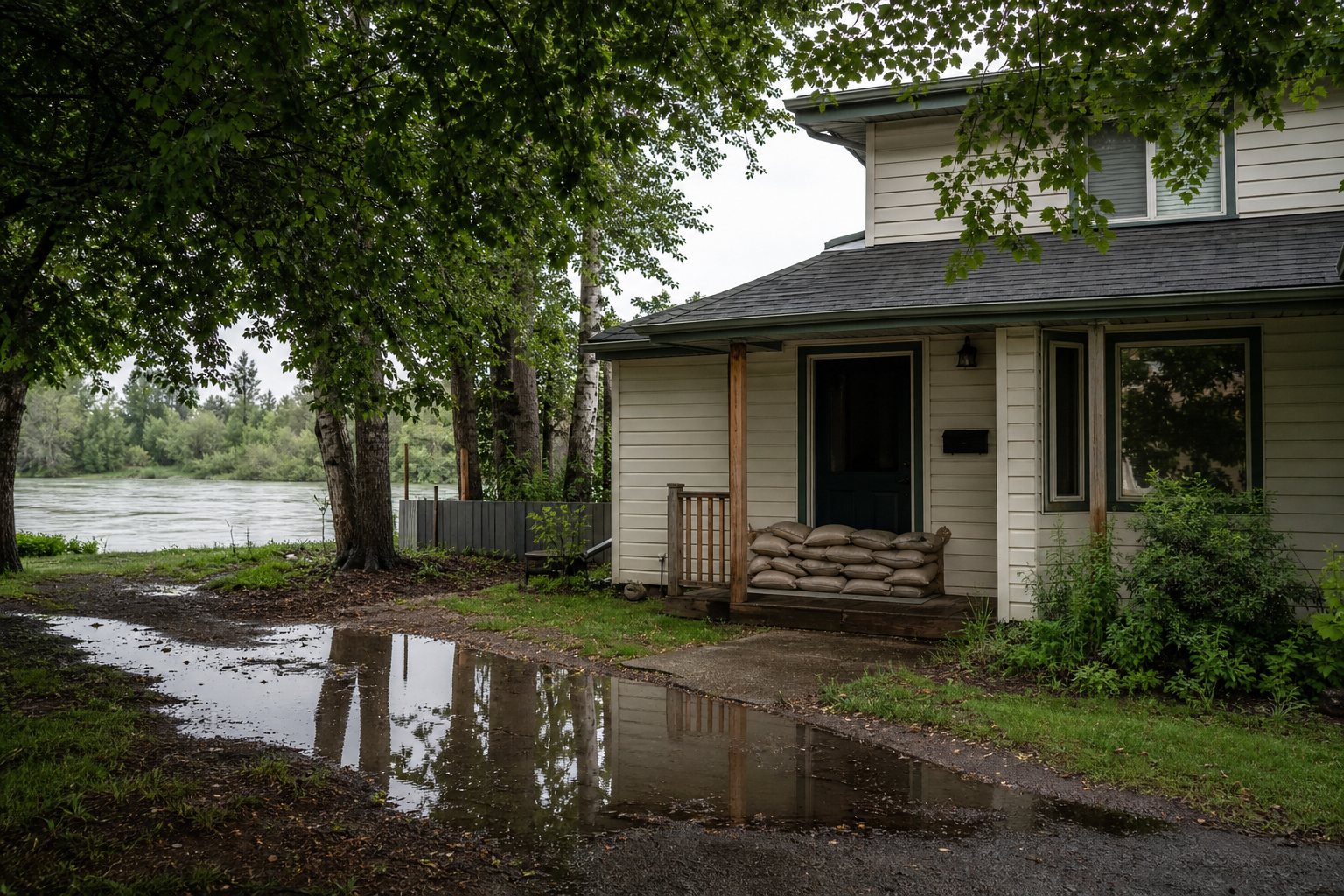
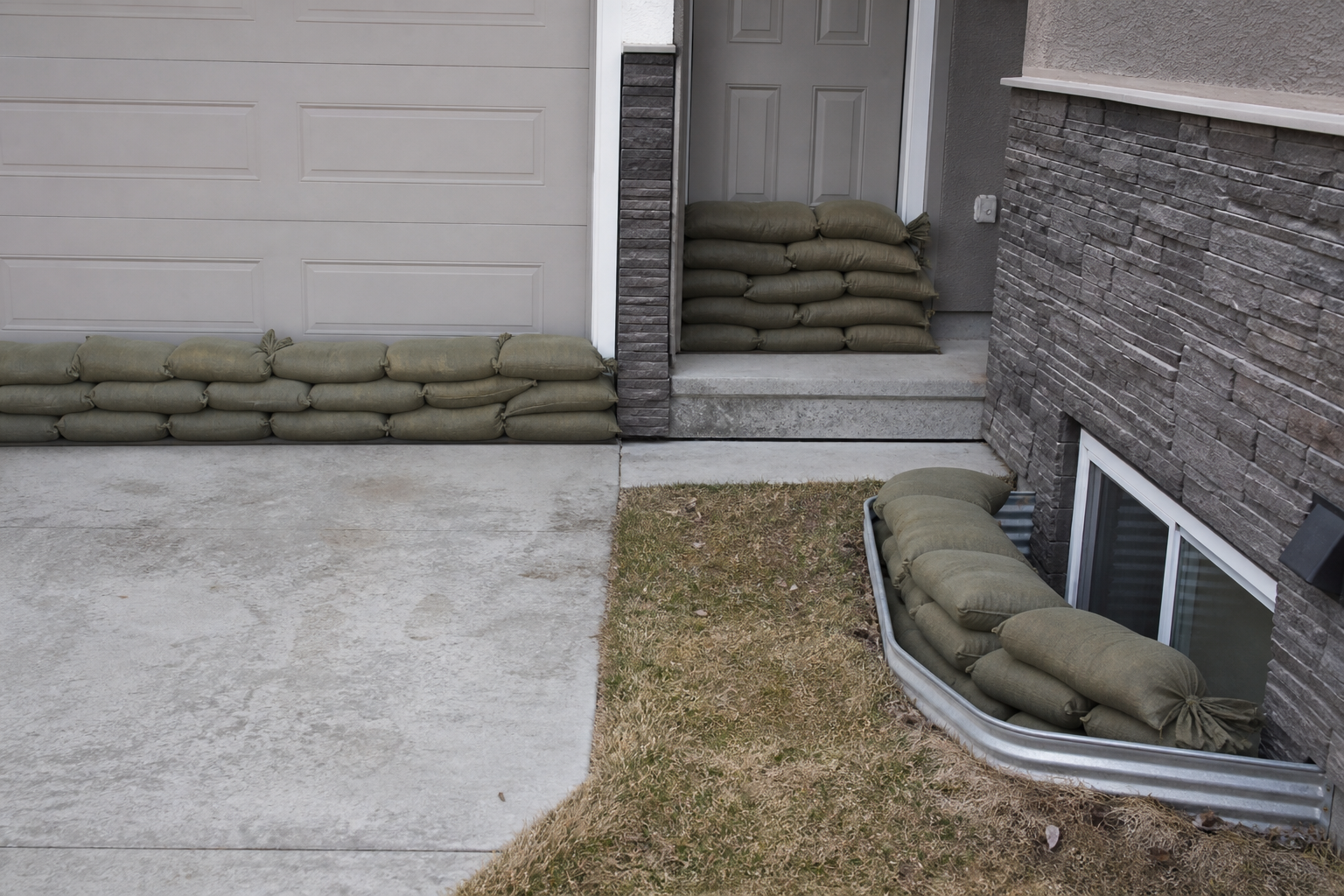
Pre-filled 18 kg hessian bags from SandBags.ca can be shaped by settling them into place. Place the first course on bare soil, pavement, or a flattened sheet, not on tall grass, branches, or round rocks. Stagger seams between rows. For a driveway edge, use a low, elongated berm that begins high and feathers toward the intended outlet. At a pedestrian door, form a compact U shape only when there is an escape route and the interior side will not become a basin. A barrier should always be checked from both sides: if water gets behind it, remove or revise a section before the depth increases.
- Keep culvert entrances clear instead of covering them with bags.
- Anchor the two ends on higher soil or extend them beyond the paved edge.
- Use one person to position and another to tamp bags flat when possible.
- Protect a low window well with a perimeter line that drains away from the foundation.
- Do not redirect runoff onto an adjacent parcel, sidewalk, or highway shoulder.
A hessian barrier is porous by nature. That is an advantage for slow control, but it cannot substitute for an engineered flood structure. It will reduce velocity, filter debris, and buy time to pump or open a safe drainage path. During a prolonged storm, revisit the setup with a flashlight only if conditions are safe. Watch for washouts, burrowing at the ends, or standing water creeping toward electrical equipment. Move vehicles before the low area becomes impassable.
Build a practical Gibbons inventory
A useful emergency inventory includes more than bags. Keep waterproof boots, work gloves, a shovel, a battery lantern, downspout extensions, and a charged phone near the planned staging area. Test a sump pump according to its manufacturer instructions before heavy-weather season. For properties with a long approach, decide which gate should be left open for a delivery vehicle and where bags can be dropped without blocking turning space. A dry pallet, garage corner, or covered porch is easier than moving stock from a muddy lawn at night.
Each pre-filled bag costs $4.99 and orders begin at 10 bags. Sketch the intended diversion and count a base row, a second row at important low points, and several extras for gaps. Delivery is priced at $0.90/km, subject to a $10 minimum for distances under 10 km. You can also use 24/7 pickup from 4315 118 Ave NW, Edmonton, AB T5W 1A5. Call 1-888-552-7263 before leaving if you want to confirm loading details, especially when bringing a small trailer.
Recover the ground instead of repeating damage
After drainage has normalized, inspect the driveway shoulder and garden edges for scouring. Replace gravel where runoff created a channel and seed bare soil promptly so the next storm has roots holding it together. Note whether the culvert outlet was the pinch point, whether a downspout pointed at the wrong slope, or whether an ornamental border created a dam. Those observations are more valuable than guessing next season. A contractor may be appropriate for recurring ponding, a collapsed pipe, or settlement beside a foundation.
Use the clear days to map your staging locations and request a planned purchase through the quote page. Related property-level techniques are explained in driveway runoff management, and ordering details appear at Gibbons sandbags. The goal is not to hold every drop back; it is to send ordinary surface water somewhere harmless before it finds the threshold.
Coordinate roadside and rural access
For Gibbons and Bon Accord, record the driveway crossing location, ditch condition, culvert diameter, roadside mailbox clearance, and preferred unloading surface. Check that a temporary berm remains visible to visitors, school-bus traffic, and service vehicles. A seasonal note about observed pond depth, drainage timing, vegetation growth, and gravel repairs helps owners choose modest preventive work before another thunderstorm arrives.
FAQ
Should I put bags over a blocked culvert?
No. Keep the inlet accessible and report public drainage issues; place a diversion that protects your structure without sealing the culvert.
What is the minimum Gibbons order?
Pre-filled bags cost $4.99 each with a 10-bag minimum.
Can bags protect a gravel driveway?
Yes, a low diagonal berm can guide runoff toward a safe outlet and reduce shoulder erosion.
Where is pickup available?
Pickup operates 24/7 from the Edmonton warehouse at 4315 118 Ave NW, Edmonton, AB T5W 1A5.