Sandbag Options for Devon and Calmar Properties
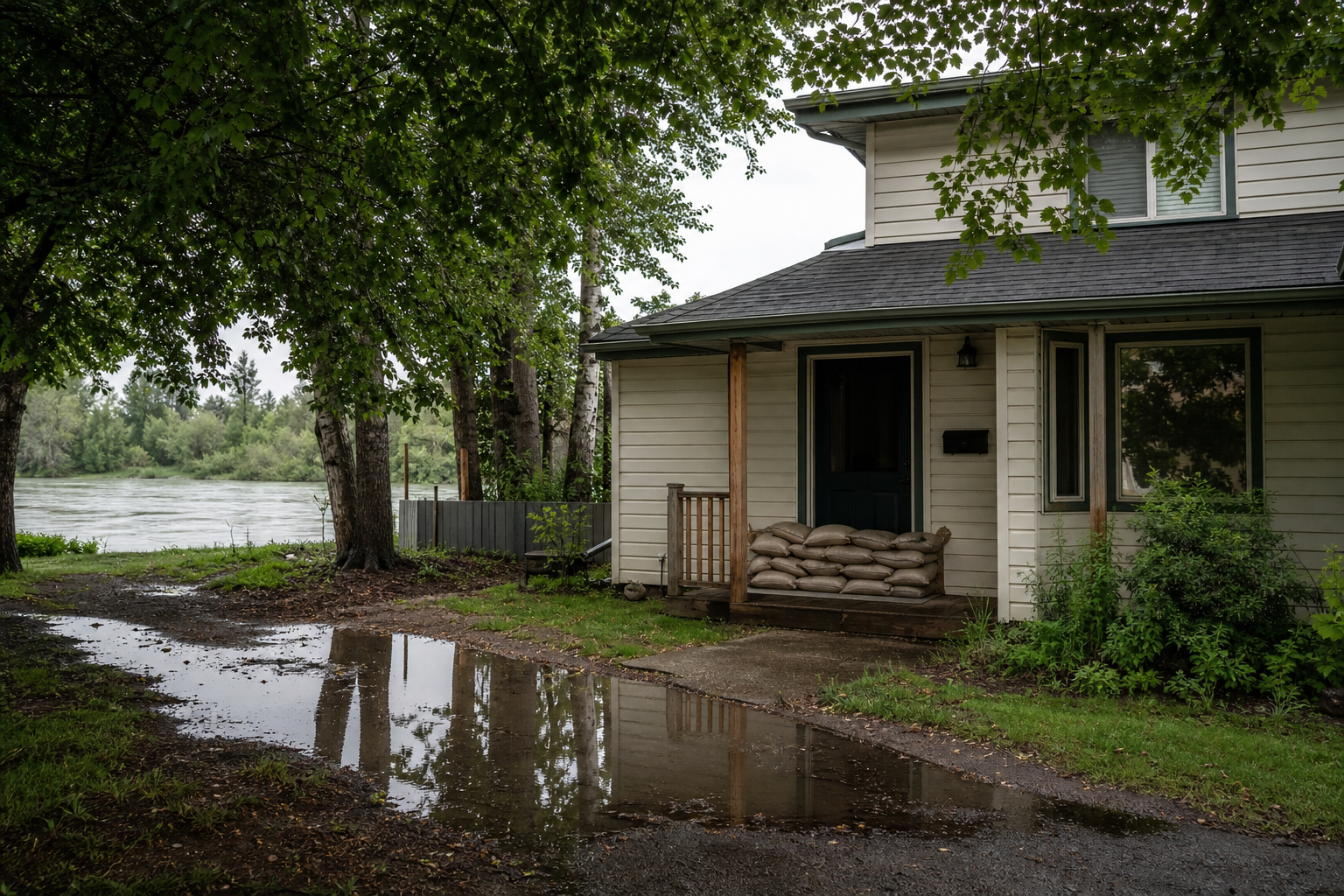
Devon and Calmar property owners can use pre-filled hessian sandbags to control surface water at doors, outbuildings, and vulnerable grades. Plan the route water should take, then order at least enough bags for a stable base and endpoint overlap.
Separate river awareness from yard drainage
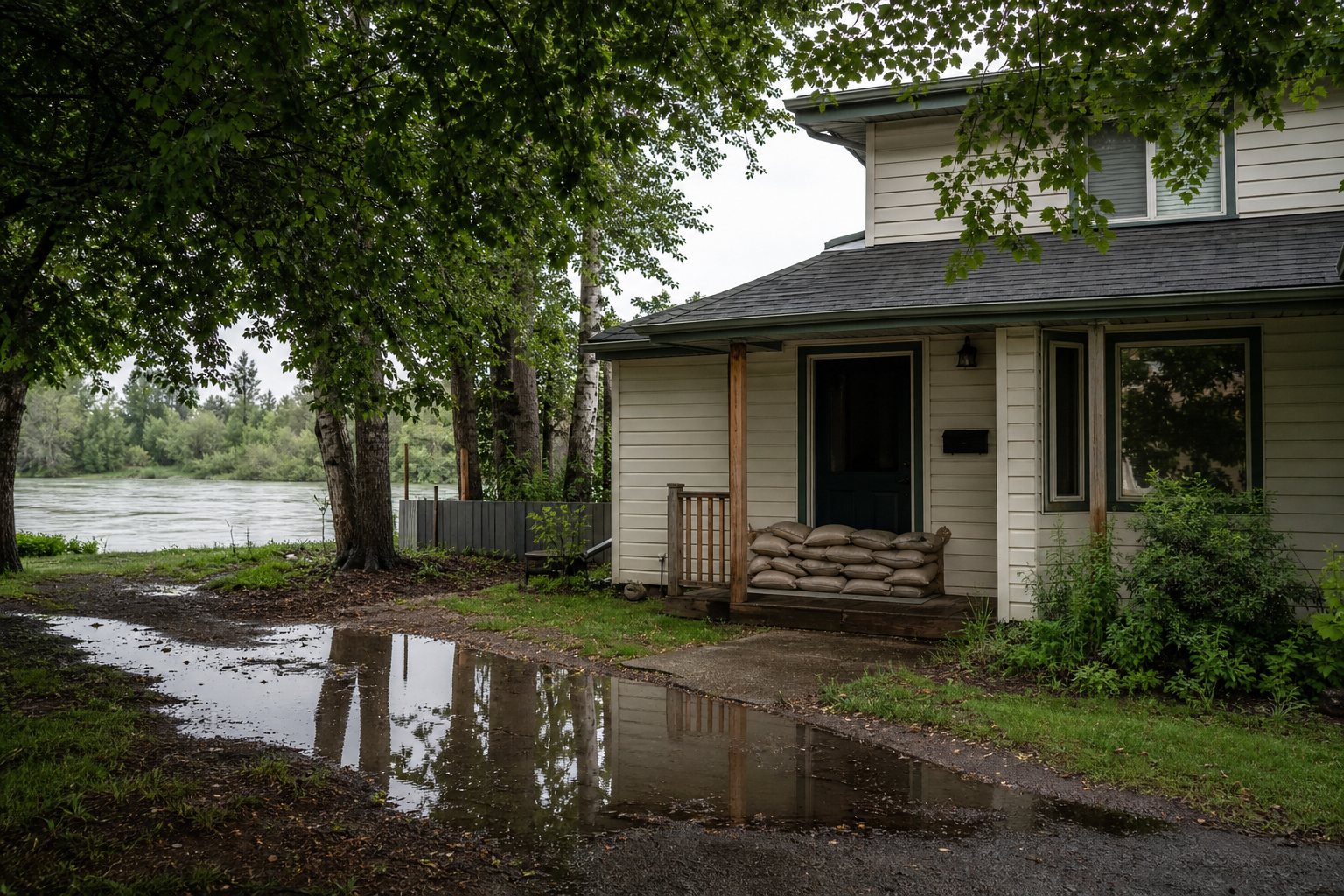
Devon’s river setting can make flood information feel especially important, while Calmar properties may be more concerned with broad flat grades, farm access, and intense local rainfall. These are related but not identical situations. Follow official alerts for any river or municipal event, respect closures, and do not enter restricted banks or moving water. At the same time, examine the immediate property for the common source of damage: roof discharge, a sunken stair, a cracked driveway edge, a low shop door, or runoff crossing a lane. A well-placed temporary line can manage shallow water on the lot, but it is not a substitute for evacuation direction or a river-flood protection plan.
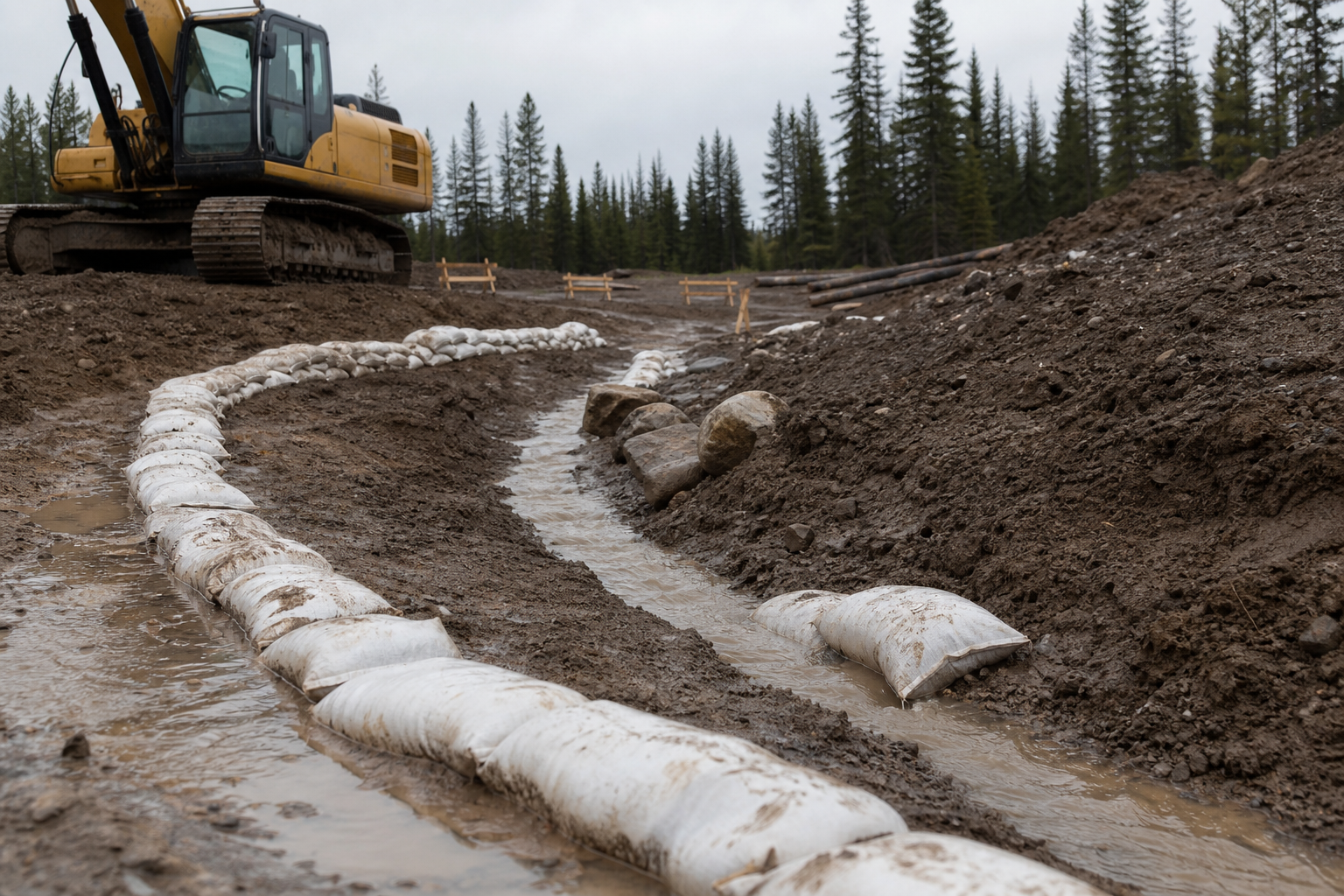
Draw a simple site map. Put arrows from eavestrough outlets to their final discharge point, note every entrance below grade, and circle stored valuables that could be moved upward. In Devon, include paths from a sloped backyard toward a patio or basement walkout. In Calmar, include wheel ruts, drainage ditches, grain-bin pads, and the sides of a large roof where rain pours off quickly. The map reveals whether a bag wall should defend a single opening or guide a wider flow. It also prevents a common error: building a barrier where it blocks the only natural exit for water.
Protect lower levels and working spaces
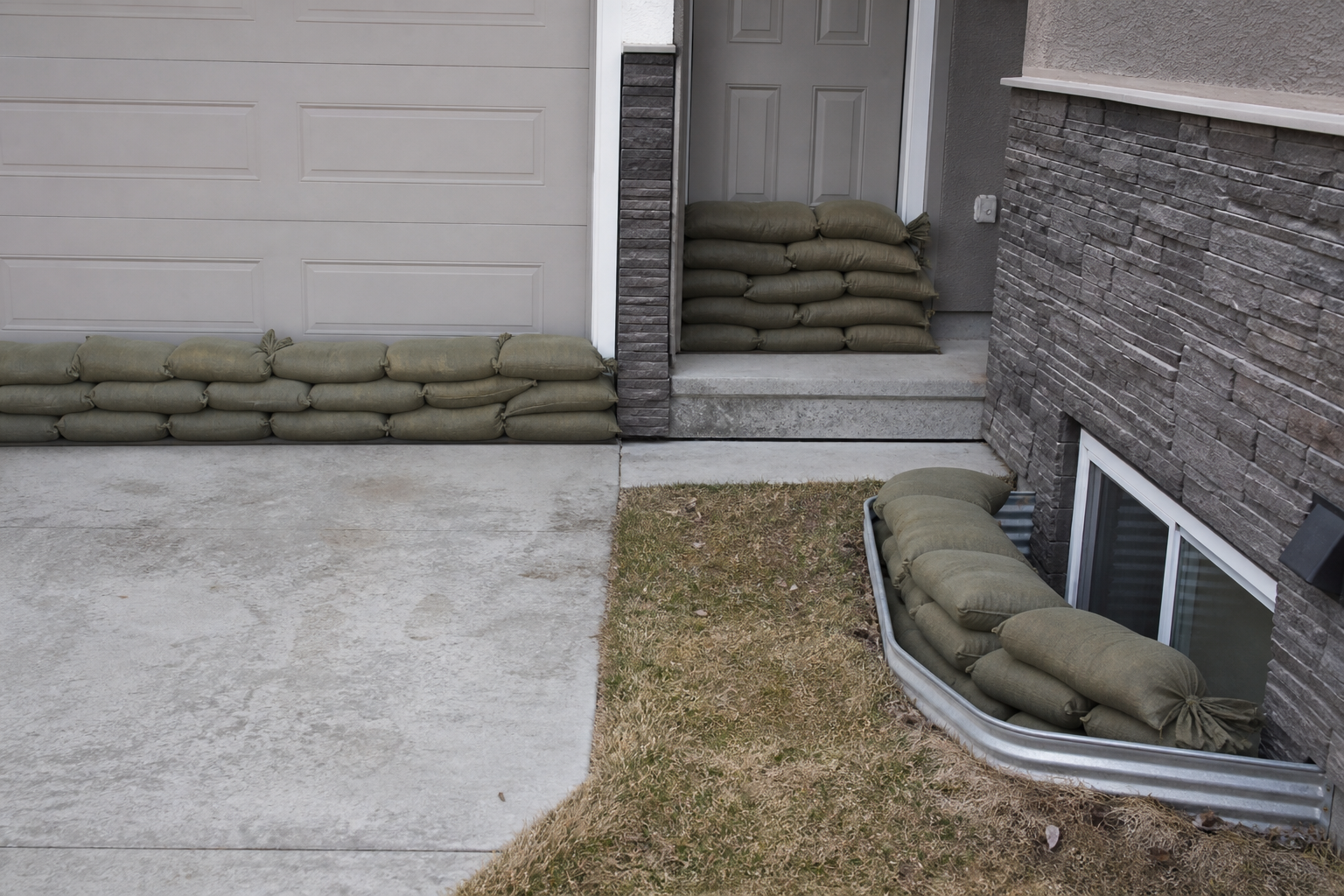
Use pre-filled 18 kg hessian bags for a short response when forecasting, a pump alarm, or visible ponding calls for action. For a basement stairwell, begin at the uphill corners and make a shallow V that deflects water past the stairs. For a garage or workshop, extend a compact wall beyond the jambs, because runoff seeks the easier path around an end. Folded bag seams should point inward or downstream where possible, while the broad face is pressed into the course beneath it. Offset every joint. A three-course barrier needs a generous footprint rather than vertical sides; settle each bag with a boot or gloved hand, never by kicking it into an unstable position.
- Move cardboard, chemicals, and electrical tools off the floor before placing barriers.
- Keep a clear path to a sump-pump outlet and verify the hose discharges away from the wall.
- Place plywood beneath bags only on firm, level ground where it will not slide.
- Check that water is being led toward grass, a drain, or an approved ditch, not another building.
- Ask a second adult to help with lifting when the route includes stairs or uneven ground.
Bag fabric will become damp, and minor seepage is normal. If the water is rising quickly, prioritize personal safety, electrical isolation by a qualified person, and emergency instructions over continued stacking. Never use sandbags to seal a sewer cleanout or prevent a backed-up sanitary line; that needs municipal or plumbing advice. For a persistent foundation leak, schedule an assessment after the immediate event rather than treating a seasonal stack as a permanent repair.
Make delivery and pickup fit the schedule
Edmonton Sandbags sells the ready-to-place units for $4.99 per bag, minimum 10. The bags are already filled, so there is no loose material to shovel in the rain. Delivery costs $0.90 per kilometre, with a $10 minimum for destinations under 10 km. Confirm whether the Devon or Calmar drop site is reachable by the planned vehicle, and choose a location that does not obstruct a fire route, gate, loading area, or drainage channel. A concise order note containing bag count, address, contact, entrance description, and desired drop point prevents delay.
For urgent collection, the warehouse is at 4315 118 Ave NW, Edmonton, AB T5W 1A5 and offers 24/7 pickup. Secure the load so it cannot shift during braking; 18 kg bags add weight quickly. Call 1-888-552-7263 with questions about access or timing. If the weather is calm, use the quote request to compare a planned supply with the estimated footprint. A few extra bags are useful for the low spot that only becomes obvious after runoff starts.
Turn observations into a lasting improvement
When the site is dry, remove debris from splash pads, lengthen short downspouts, and restore any compacted soil that now directs water toward the structure. Look for stains along fence boards or mulch lines; they show the real flow path better than memory does. Store clean, intact bags under shelter if a future temporary diversion is likely. Replace damaged hessian rather than relying on torn fabric. Dispose of bags exposed to hazardous or sewage-contaminated water according to local instructions.
For more site-specific ordering, visit Devon sandbags or read basement stairwell protection. The most resilient property combines a temporary response for exceptional weather with permanent grading, drainage maintenance, and a written family or staff plan.
Prepare family and farm routines
Devon and Calmar households benefit from a written wet-weather sequence: receive the alert, move vehicles, secure outdoor materials, test the backup pump, inspect discharge, place the first diversion, and report public hazards. Add livestock, equipment, and medication considerations for rural sites. Reviewing the sequence with everyone who may be present prevents duplicated effort and preserves safe communication when phones, weather, and travel conditions become distracting.
FAQ
Can sandbags protect a Devon walkout?
They can divert shallow surface water around a walkout when the ends extend to higher ground and an outlet remains open.
Are Calmar orders delivered?
Yes. Delivery is $0.90 per kilometre, with a $10 minimum under 10 km.
How heavy is each unit?
Each hessian bag is pre-filled to approximately 18 kg.
Can I pick up after business hours?
Yes, Edmonton Sandbags provides 24/7 pickup from 4315 118 Ave NW, Edmonton, AB T5W 1A5.