Commercial Sandbags for Storefront Flood Readiness
Storefront sandbags should protect stock and thresholds without blocking customer access, fire exits, or accessible routes. A documented placement plan lets staff deploy pre-filled bags quickly and remove them when the weather passes.
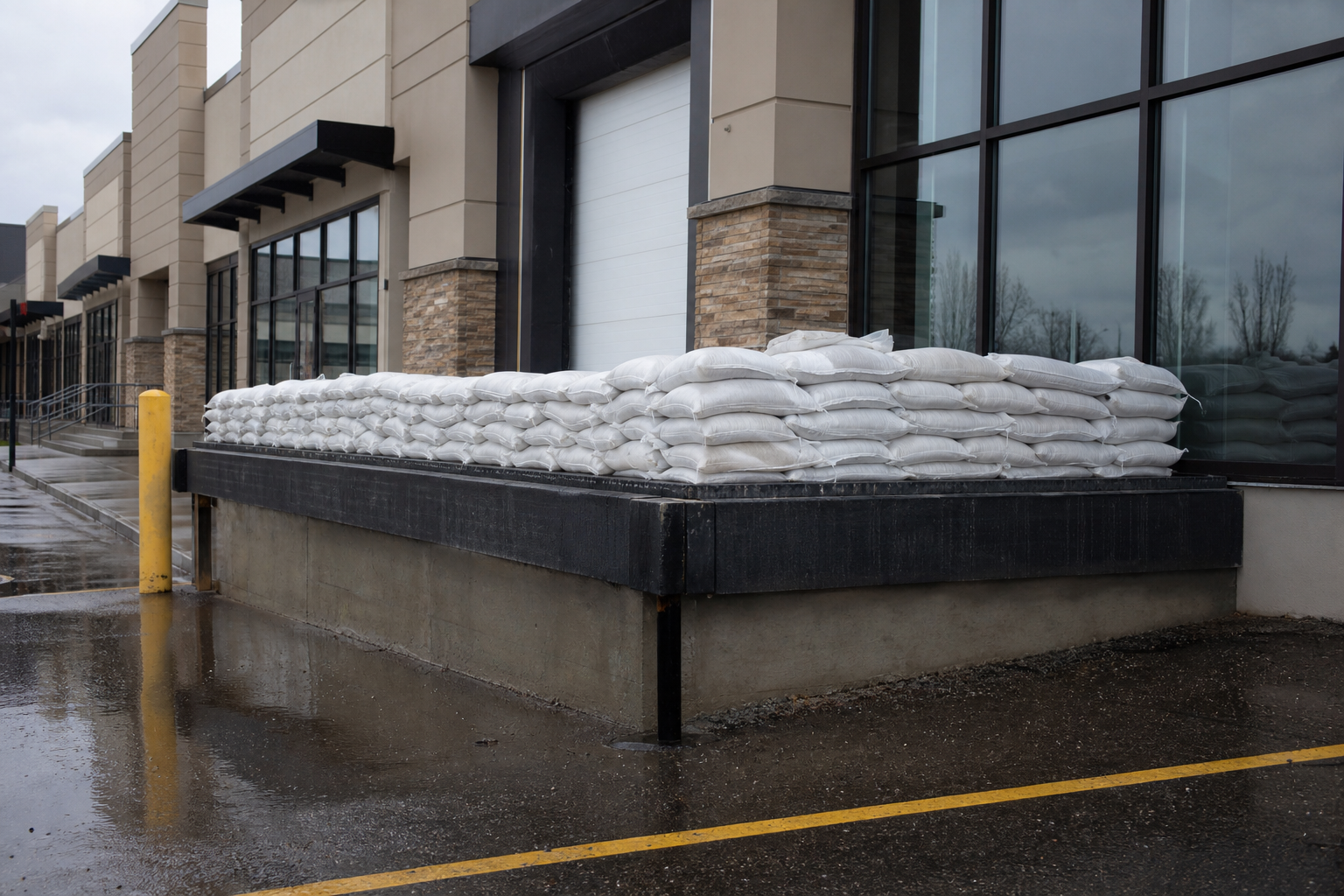
Start with customer safety and continuity
A retail, restaurant, clinic, or office entrance is not a residential doorway. Customers may arrive with strollers, mobility devices, deliveries, or limited familiarity with the site. A row of bags placed casually across the main approach can create a trip hazard and interfere with accessibility or emergency egress. The first step is therefore operational: identify the public entrance, alternate entrance, fire exits, receiving door, electrical room, floor drains, and the route staff use to move stock. Decide in advance which door remains open, how customers will be directed, and who has authority to close a wet area.
Review the lease and building contact procedure before severe-weather season. In some plazas the landlord manages exterior drainage, while the tenant is responsible for interior inventory and immediate reporting. Photograph ponding, report blocked private drains promptly, and retain a log of incidents. Pre-filled bags are a temporary risk-control tool; they should not hide a recurring roof, membrane, plumbing, or grading failure. A clear escalation plan keeps a staff member from improvising while the floor is already wet.
Deploy a low-profile retail barrier
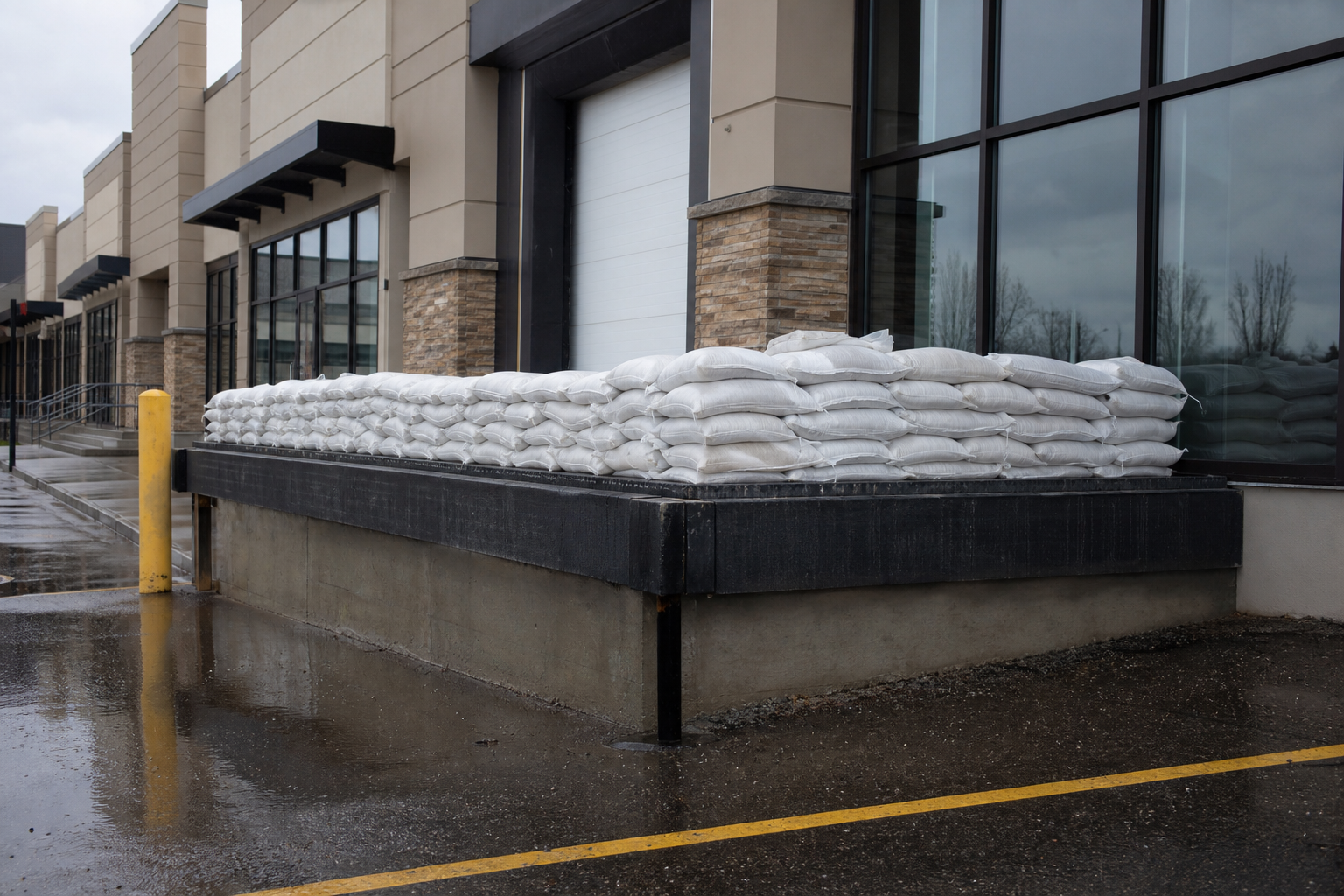
For a shallow rain event, a staggered one- or two-course bag line can guide surface water away from a recessed door or receiving threshold. Use pre-filled 18 kg hessian bags, flattening each bag so its neighbours overlap. Begin beyond the jamb on the upstream side, angle the line toward the intended drain or grade, and finish beyond the opposite jamb where water cannot curl back. Do not seal a door that could become a required emergency exit. Instead, close the affected entrance through normal procedures, place visible signage, and direct visitors to an approved accessible alternative.
- Place wet-floor signs before the first bag is set down.
- Keep fire department connections, hydrants, and electrical panels unobstructed.
- Use cones or barricades to make a low barrier visible in dim parking lots.
- Assign one staff member to inspect seams and another to communicate with management.
- Move cartons, point-of-sale backups, and vulnerable merchandise above floor level.
Loading docks deserve separate attention. Water can enter beneath an overhead door, through a leveler pit, or from a sloped service lane. A broad base at the dock perimeter may slow a thin flow, but forklift traffic changes the plan: do not leave bags where wheels will strike them or where employees must make an unsafe detour. Coordinate with delivery drivers and suspend receiving if the apron is hazardous. If pumping is required, route hoses so they do not cross a public path without proper protection.
Order quantities for the actual frontage
Commercial managers often underestimate bag count by measuring only the door width. Include wings, corners, the receiving area, and a reserve for the location discovered after deployment. Edmonton Sandbags prices pre-filled units at $4.99 each with a 10-bag minimum. Record the number used at each entrance on a site diagram. That record speeds the next response and supports a sensible seasonal order rather than a rushed guess. A manager can submit dimensions and access notes through the commercial quote form.
Delivery is $0.90 per kilometre, with a $10 minimum under 10 km. Give the driver a safe unloading point, unit number, receiver name, and instructions for any security gate. For businesses operating late, 24/7 pickup is available from the warehouse at 4315 118 Ave NW, Edmonton, AB T5W 1A5. Call 1-888-552-7263 to confirm order readiness or loading arrangements. Because each hessian bag weighs about 18 kg, plan the vehicle payload and use team lifting or a cart where appropriate.
Train staff without creating unsafe work
A short tabletop drill is more useful than a long policy nobody reads. Give staff a weather scenario, have them identify the safe entrance and stock-move priorities, then walk the placement route without lifting anything. Teach employees to stop if water reaches electrical equipment, if a bag must be carried up slippery stairs, or if traffic cannot be safely separated. Emergency services and building management remain the right contact for serious hazards. Supplier support is for materials, not emergency rescue.
After an incident, remove barriers once the exterior is safe, dry the floor, document damage, and inspect the bags. Clean bags may be stored off the floor in a dry, labelled location; bags exposed to contaminated water must be handled appropriately. Update the plan with what delayed the response: missing keys, an inaccessible loading bay, unclear tenant responsibilities, or insufficient signage. See commercial water response planning and commercial sandbag ordering for follow-up resources. The best storefront defence protects people first, then merchandise and operations.
Document operations after each response
Storefront leaders should record rainfall timing, staff assignments, customer-routing decisions, barrier locations, photos, incident reports, cleanup costs, vendor calls, and landlord notifications. Review the record during the next safety meeting with managers and frontline employees. This evidence identifies whether a door seal, canopy drain, pavement joint, signage plan, or inventory storage practice needs correction before the next operational disruption.
Review accessibility, emergency routes, weather notices, staffing coverage, and supplier contacts every quarter.
FAQ
Can bags block a store entrance?
Do not obstruct a required exit or accessible route. Use approved closure procedures and direct customers to a safe alternative.
How should a business estimate quantity?
Measure every opening, add wings beyond each jamb, include loading areas, and keep a reserve for low seams.
What are the bag and delivery prices?
Bags are $4.99 each with a 10-bag minimum; delivery is $0.90/km with a $10 minimum below 10 km.
Can a night-shift manager collect materials?
Yes. Pickup is available 24/7 at the Edmonton warehouse, 4315 118 Ave NW, Edmonton, AB T5W 1A5.